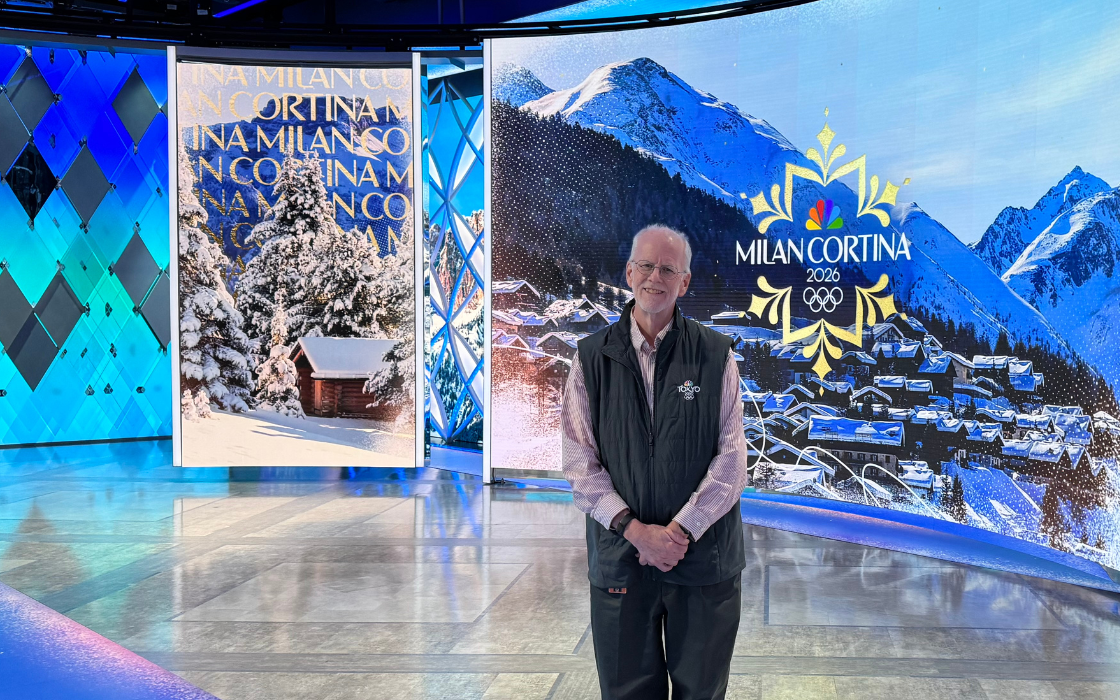
The art of the Olympics broadcast
Turn on the Olympic Games, and the greatest athletes in the world make the hardest tasks look easy. Whether they stick the landing, fall out of the lead or bring home the gold, one thing is certain: even the most challenging events carry an undeniable rhythm of effortlessness.
That’s how you know you’re watching the very best.
From the ice to the track to the court, it’s not just the Olympians pulling it off; It’s happening behind the camera, too. A race ends, a replay rolls and a commentator picks up the thread without missing a beat. It’s television at its most polished and present. It’s so seamless, in fact, you might forget it’s live.
Behind the scenes, however, it’s another matter entirely.
A team of people making a thousand decisions at once. A constant negotiation with time, weather, technology, talent and a side dish of “cameras-rolling” chaos.
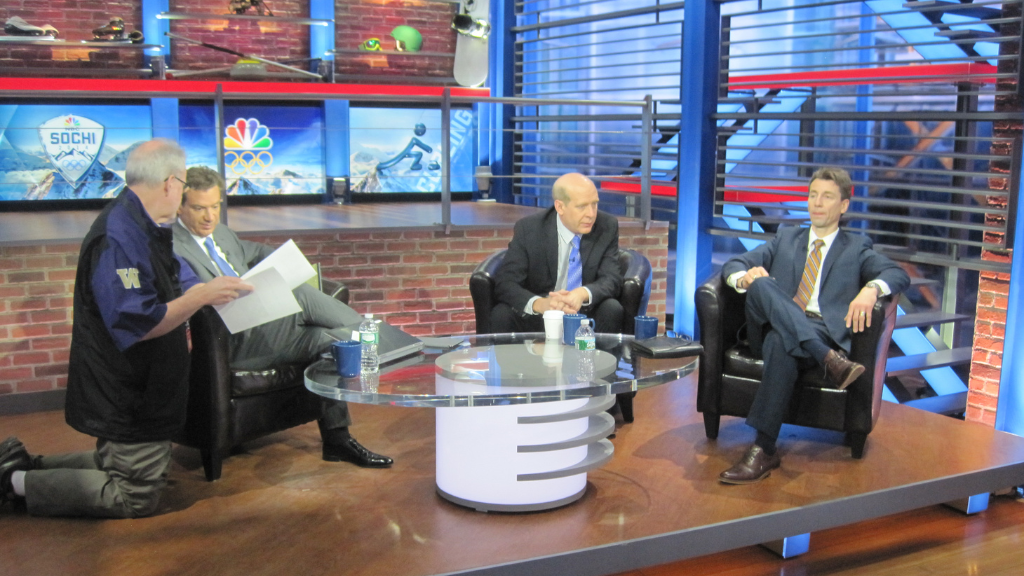
Inside that tension, between the controlled commotion of order and improvisation, UW Tacoma’s Bill Kunz, Ph.D., has built a career, shaping live television at its most unpredictable edges and thinking three steps ahead of the action.
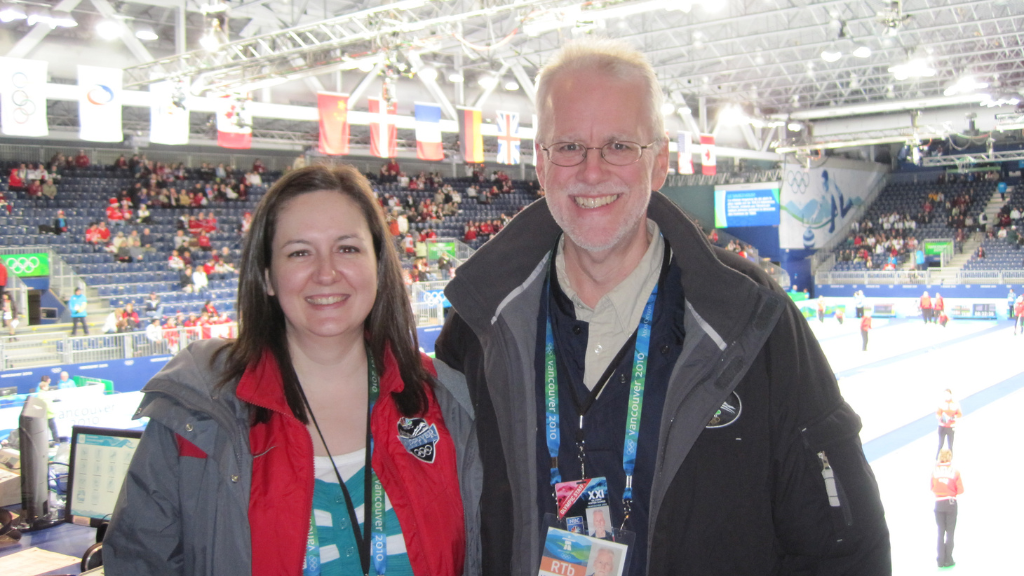
During the 2026 Winter Games in Milan, Kunz — a professor of culture, arts and communication in the School of Interdisciplinary Arts & Sciences — marked his 16th Olympics (his 12th as a faculty member at UW Tacoma). At the crossroads of mass media, athleticism and academics, Kunz has carved out a niche that’s won him 10 Sports Emmy Awards, making him an established, trusted professional in the field he’s preparing students for.
A never boring production
“There’s no ‘average day’ when broadcasting the Olympic Games,” Kunz says. And he means it.
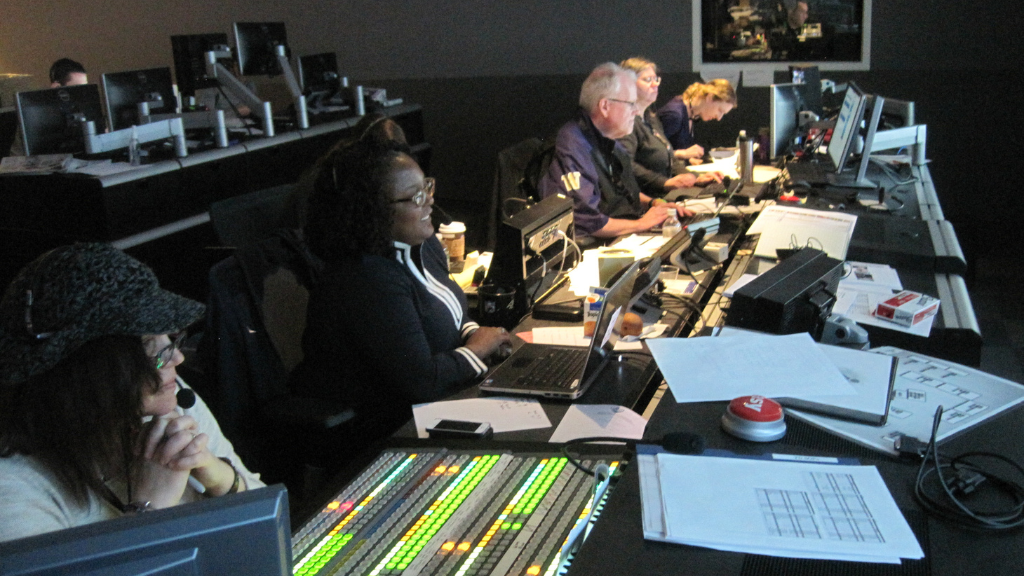
His alarm goes off sometime before 2 a.m. in Stamford, Connecticut, from where NBC Sports runs its Olympic operations. By 2:30 a.m., he’s on a call with colleagues in Milan, syncing scenario planning logistics across time zones.
From there, Bill makes the rounds, checking feeds, reviewing the overnight handoff, making sure nothing slipped through the cracks while crews rotated out at 1 a.m. It’s part technical audit, part instinct.
Once all his ducks are in a row, the real question remains: What kind of day is this going to be?
For this, Kunz looks, in part, to Mother Nature.
Weather, and when things go sideways
Troublesome weather can put a wrench in even the best-laid plans when it comes to the Olympic Games. Winter Olympics coverage comes with a particular flavor of unpredictability. Snow doesn’t fall as forecasted. Gale-force winds show up uninvited. Visibility drops to dangerous levels.
All the while, thousands of people ascend icy, rural and winding mountain roads to attend the day’s events (roads never designed for such a volume of visitors).
This year’s games in Milan were no different.
Because of this, events get paused, delayed, or postponed altogether. All of a sudden, a carefully planned television window — tight, deliberate and timed down to the second — has a hole in it. A gap of 30 minutes, maybe more. “You’ve got to go somewhere,” Kunz says. “And there aren’t always great options to choose between.”
This is where the job becomes less about execution and more about improvisation — in other words, how quickly can you think on your feet? Kunz and the NBC Olympics programming team start running scenarios:
- Which events often end ahead of schedule?
- Which ones usually run long?
- Who’s available on camera, and can they stretch, fill or pivot?
- What pre-produced segments are ready to roll right now?
- It’s one part logistics, one part storytelling and a pinch of going with your gut. And all of it has to happen fast.
From the control room to the classroom
Spend an afternoon in his classroom, and you might hear Kunz talk about media conglomeration or the economics of television. He may mention the major media companies driving today’s entertainment landscape, and if you’re lucky, he’ll wrap your mind around how policy decisions shape what we watch. In the lecture hall, these ideas may sound abstract, but they’re a lived experience for Kunz.
He got his start in sports broadcasting in the mid-1980s — a time when media consolidation was only beginning to shift the industry. Over the years, he’s worked at some of the largest media organizations in the world, observing shifts in the media landscape from the belly of the beast.
Kunz brings those tried-and-tested insights to the classroom, drawing on decades of Emmy-winning expertise to provide students with theoretical knowledge grounded in real industry experience. They’re hearing from someone who’s been in the control room when things went sideways (and figured out how to fix them).
Sometimes, they even get to see it firsthand. Over the years, Kunz has brought students into production environments tied to Olympic coverage not as spectators, but as participants. It’s one thing to study television, but it’s another to make it.
How streaming changed the game(s)
When it comes to the Olympics, just like everything else on TV, streaming has changed the games.
After its debut in 2020, Peacock — NBC’s streaming service — offered new ways for audiences to engage with the Olympics. Viewers could catch nearly any event, any time. It sounds like total freedom, but for all the options Peacock offered to watch the games, it made up for it in decision fatigue.
Not that the broadcast audience has gone anywhere, anyway; Millions still tune in to traditional coverage. For the Paris Games in 2024, roughly 30.6 million people watched on broadcast (up 82% from the Tokyo Olympics in 2020). “There’s something that grabs people about watching live sports,” Kunz says.
Is it the shared moment? The unpredictability? The collective effervescence? Maybe it’s the simple fact that when something is happening live, it becomes even harder to look away.
Looking ahead to Los Angeles
Kunz is already pondering the 2028 Summer Olympics in Los Angeles.
A time zone in the United States. No overnight calls to Milan. No 2 a.m. alarms (well, maybe fewer of them).
It sounds easier, but it won’t be.
Live, fully synchronized coverage brings its own challenges: The pace changes, expectations shift and the margin for error remains razor-thin.
But that’s the nature of the work. It evolves, then evolves again.
Kunz teaches his students there aren’t simple answers in this field. There’s no single path, and none of them has a map. Technologies rise and fall. Media rights change hands. Entire platforms appear, shake things up and fizzle out in the same breath.
Put it to Kunz, and his advice to students is simple:
“Be aware of how things are changing so you can position yourself accordingly.”
A different kind of glory
At the end of the day, most viewers will never know it’s Kunz and the NBC Olympics team behind the camera, pulling off what collectively amounts to a logistical miracle.
They’ll remember the race, the medal and the moment when everything seemed to come together perfectly, as if made for TV. They won’t see the early mornings, the contingency plans or the split-second decisions made in a control room thousands of miles away. And that’s kind of the point.
The best kind of broadcast feels invisible. It’s that seamless.
But if you look closely — if you pause long enough to get curious about how it all comes together — you’ll find educators and creators like Bill Kunz, shaping the story in real time. Not in front of the camera, but behind it, making sure that when the world tunes in, it feels like everything is exactly where it should be.