From campus to capitol
“To stand up and advocate for what you believe in, when you know you’re going to fail…that was a different kind of leadership,” reflects Ria J. Humawan Johnson, a Tacoma Husky studying politics, philosophy and economics. Johnson calls in from Hong Kong, where she’s leading an international delegation as President of Tacoma Sister Cities.
The lesson she describes — drawn from her time as a legislative intern in Olympia — has stuck with her far beyond the walls of the Washington State Capitol. It’s a lesson about persistence and the quiet discipline of participation, even when the outcome feels uncertain.
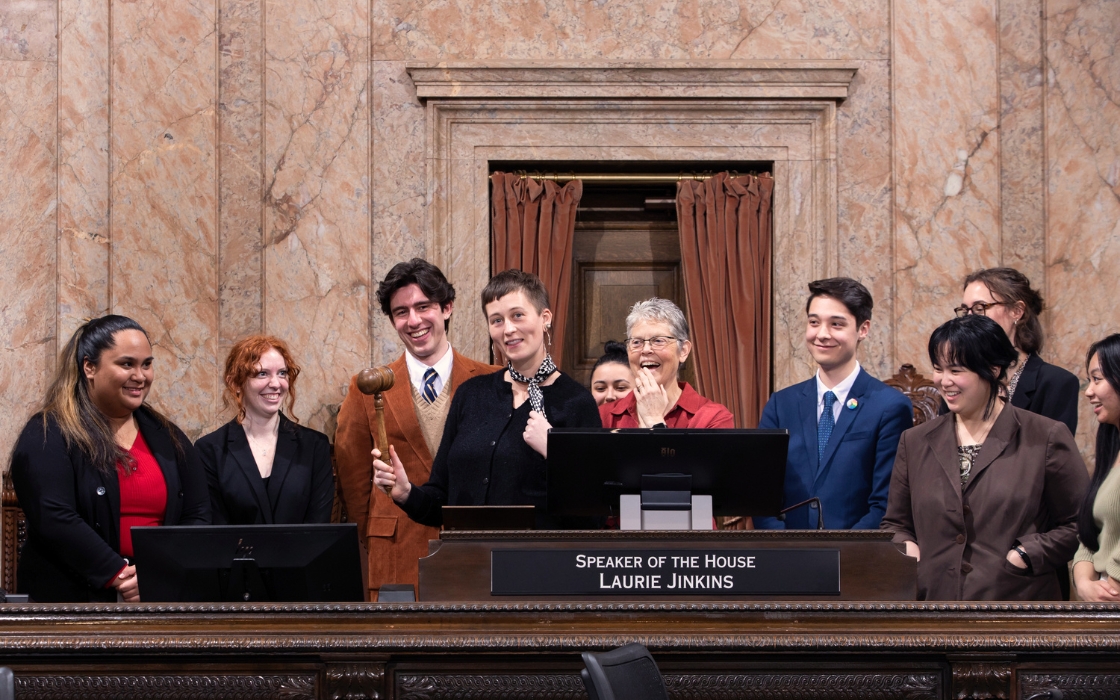
For Johnson and a growing number of Tacoma Huskies, the Washington State Legislative Internship Program represents a formative experience that shapes how students understand public service, leadership and their role within the broader civic landscape.
A path to public service
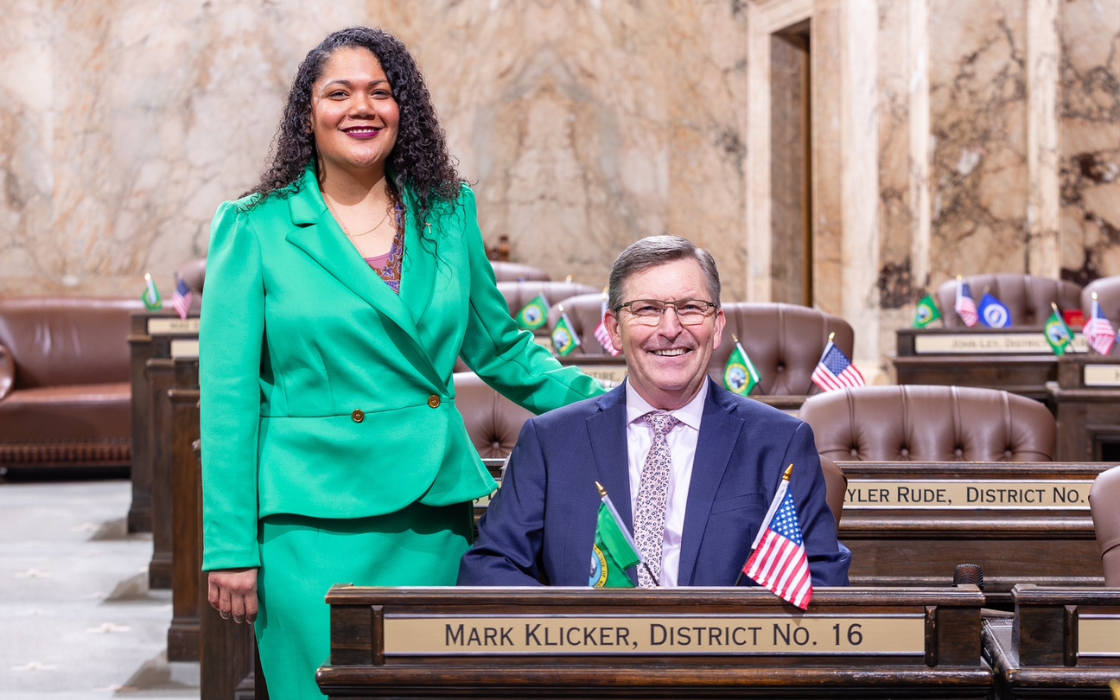
Each January, 70 students from across Washington are selected to serve as full-time, nonpartisan legislative staff in Olympia. Established in 1955, the Legislative Internship Program places students directly in the offices of state senators, representatives or caucus teams during the state legislative session.
Interns earn academic credit and receive a monthly stipend while contributing to the daily operations of government. Their work includes drafting constituent correspondence, conducting policy research, tracking legislative and supporting communications efforts. Many attend committee hearings, assist with casework and observe the procedural flow of lawmaking in real time.
In parallel with their office assignments, interns participate in a structured curriculum that includes seminars on legislative processes, ethics, media relations and public policy. They engage in simulations — most notably a mock committee and floor debate — where they assume the roles of legislators and staff, working through real bills from the current session.
These exercises, along with job shadowing opportunities and professional development workshops, offer students a comprehensive view of how policy is developed, debated and implemented on the state level.
Political experience isn’t required, and the program is open to students of all majors and backgrounds. What matters most is intellectual curiosity and a willingness to engage with complex systems that shape everyday life in Washington state.
“The program was designed to give college students in Washington State the opportunity to work onsite in the office of a legislative official to learn more about how state politics work,” says Professor Benjamin Meiches, vice chair of the department of social sciences at UW Tacoma. “Students who come out of this program have invaluable, high-impact experiences, whether it’s having coffee with the governor to talk through the legislative landscape, or brushing up on the budget deficit facing higher education because they’re in those committee hearings every day.”
Meaningful work meets high-stakes
Forget coffee runs and front desk duty. In Olympia, interns aren’t passive observers. They contribute directly to the work of legislative offices, often in ways that require both technical skills and careful judgment.
Brooklyn Darling Jay (‘23) pursued the internship with persistence, ultimately serving in the House of Representatives as a law and policy major at UW Tacoma. Working across three offices with distinct legislative priorities and communication styles, Jay now prepares to attend UC Berkeley for law school.
Jay’s experience in a swing district shed light on the importance of thoughtful constituent communication.
“I learned a lot about what it means to have your response to a constituent be impactful… There was a lot more intention to it than I realized,” Jay said. Crafting responses required a balance of clarity, accuracy and sensitivity to differing perspectives — fundamental skills for effective governance.
Before graduating last spring, Chloe D’Cruz (‘25) was a politics, philosophy and economics (PPE) major who brought a global perspective to local government thanks to her overseas upbringing.
“I grew up in Dubai,” says D’Cruz. “My parents always say there’s no better experience than when you’re directly thrown into something and you’re learning on the go.” Her work in a Senate office led to a return role as a session aide, and she’s now pursuing graduate studies in international diplomacy.
D’Cruz was entrusted with drafting correspondence, managing outreach and participating in meetings with policymakers and stakeholders. “From my first day on the job, I was drafting emails and taking calls.”
In one instance, she worked directly with a constituent to clarify the implications of a property tax bill, transforming confusion into understanding.
“After talking to [the constituent] on the phone when he was really upset, I explained the bill,” D’Cruz said. “After I did, he realized he’d actually benefit from the legislation. We ended up laughing together before hanging up.”
Cobi Clark (‘25) entered the program after a 15-year career in construction and real estate development, where he managed multimillion-dollar projects. Choosing to step into an internship role required a deliberate shift grounded in long-term goals.
“It felt weird applying for an internship. I’ve built $50 million buildings, now I’m here applying for a career change,” Clark says. “But I’m glad I did it.”
Clark’s background in housing development aligned with his senator’s legislative priorities, allowing him to contribute substantively to policymaking discussions.
“The senator that I worked for said, ‘Cobi, you’ve built housing before. Look at this housing action plan and let’s develop some policy ideas,’” Clark said.
His research and recommendations informed legislative proposals, offering a clear example of how interns can shape the policy process when experience and opportunity align.
“Eventually, the senator was up there on the floor using my talking points,” Clark reflects. “Hearing those points come out of his mouth, and listening to the other senators debate those points, was a great experience.”
Ultimately, Clark came up with several new pieces of legislation — one of which passed the Senate. He graduated from UW Tacoma in 2025 with a double major in PPE, economics and policy analysis. Clark now plans to run for a seat in the state legislature.
Ria J. Humawan Johnson, a current student and longtime community advocate, approached the internship with extensive civic experience. As the eldest member of her internship cohort, she became a mentor figure among her peers, facilitating connections and encouraging deeper engagement with the institutions around them.
Johnson complemented her office responsibilities with a broader approach to engagement. She organized informal learning opportunities for fellow interns, encouraging them to explore the judicial system, meet public officials and expand their understanding of state government beyond their assigned roles.
“I would take the other interns on field trips,” Johnson recalls. “If you’re in the hallway, we’re going to meet some people. We’re going to the law library at the Temple of Justice, we’re going to watch a court case and we’re going to get everything we can out of this experience with the time we were given.”
Connections extended beyond the session
A defining feature of the Legislative Internship Program is the network it nurtures.
For D’Cruz, relationships built during her internship directly led to subsequent roles in both nonprofit and legislative settings. “After the internship, I went on to work with survivors of trafficking, then I returned the following year to work as a legislative session aide,” explains D’Cruz. “Networking was the biggest thing I learned there, and honestly, it’s what got me my next two jobs.”
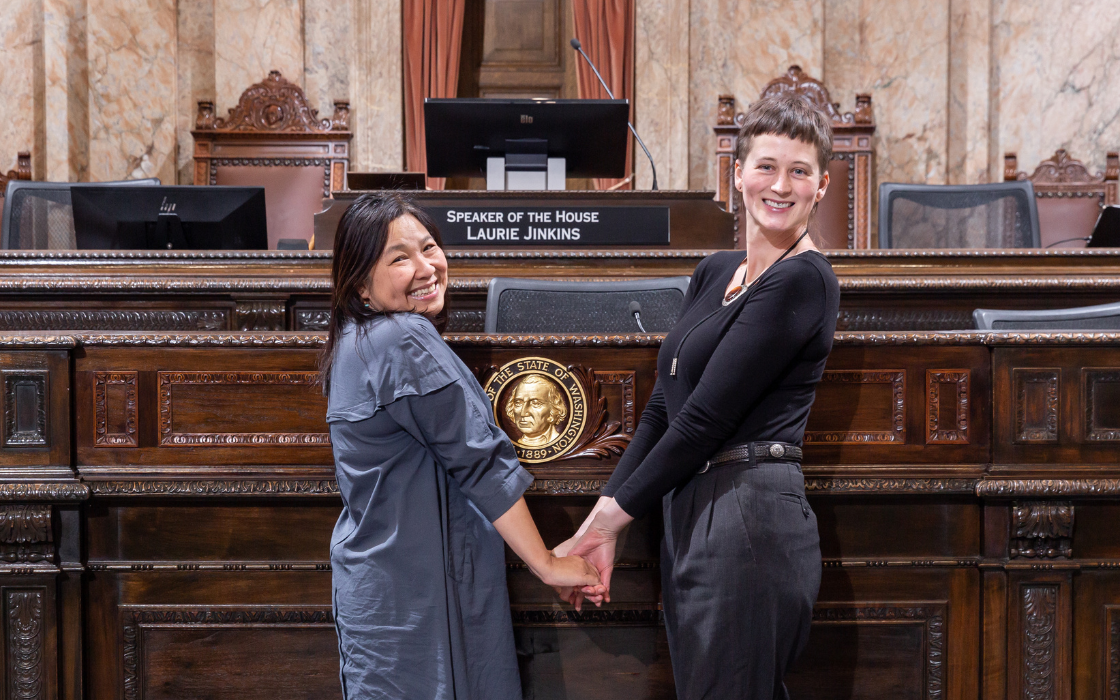
Johnson aimed to help her fellow interns make the most out of the program, removing barriers to access and reinforcing the collaborative nature of the internship experience. “I was always in a position to introduce [the other interns] to someone,” says Johnson. “When you have the opportunity to shake hands with a justice or with the Speaker of the House, you have to take it! I was proud to facilitate those connections.”
Jay found that the experience strengthened her academic and professional trajectory, contributing to her successful application to law school. The internship provided not only credentials and civic experience, but a clearer articulation of her goals and values.
Clark’s time in Olympia affirmed his commitment to public office, providing both the practical experience and the professional network needed to pursue it: “I don’t think I would be nearly as capable a politician as I am now if it weren’t for the internship,” says Clark, who continues to collaborate with those he met during his internship as he develops his political campaign.
A deeper understanding of civic life
Beyond career outcomes, the internship program offers something less tangible but equally important: a clearer understanding of how democratic systems work.
Students witness the full spectrum of legislative activity, from policy development and debate to constituent interaction and compromise. They observe how decisions are shaped, how disagreements are managed and how lawmakers navigate competing priorities within a shared framework.
Experiences like these challenge assumptions. They reveal the strengths and limitations of the system, underscoring the importance of informed, engaged participation in the process.
As Jay noted, even small insights — like the impact of personalized communication with legislators — can change how communities engage with their government long after an internship ends.
Carrying the work forward
As an intern who supported the legislative minority during her time in Olympia, Johnson witnessed a new, compelling flavor of political leadership — one that was principled and driven by integrity, regardless of the legislation’s likelihood of success.
Johnson’s early reflection offers a fitting conclusion:
“I can’t afford to be discouraged,” she said. “I can’t afford to lose hope. I can’t afford not to stand up and fight, regardless of the outcome.” In other words, civic duty in a nutshell.
The legislative internship offered these Tacoma Huskies an introduction to government that demanded their participation — to contribute, observe and reflect. In doing so, it helped shape their careers and their understanding of what it means to be engaged members of a democratic society. And that may be its most enduring impact.
__________
Looking to learn, serve and lead in Olympia? Applications for the 2027 Washington State Legislative Internship cohort will open on September 1, 2026. Political experience is not necessary. Students of all majors are encouraged to apply.