Tacoma Huskies Take the Stage
Ask a theater kid where they were when Jesse egged Rachel in the parking lot before regionals, and they’ll take you back in time with the laser-like precision of Vocal Adrenaline’s rendition of “Bohemian Rhapsody.”
Before Glee turned them into household names, Jonathan Groff and Lea Michele were channeling the same adolescent ache on Broadway in Spring Awakening — a punk rock musical set in nineteenth century Germany, bursting at the seams with youthful vitality, yet tightly bound by a culture of shame and silence.
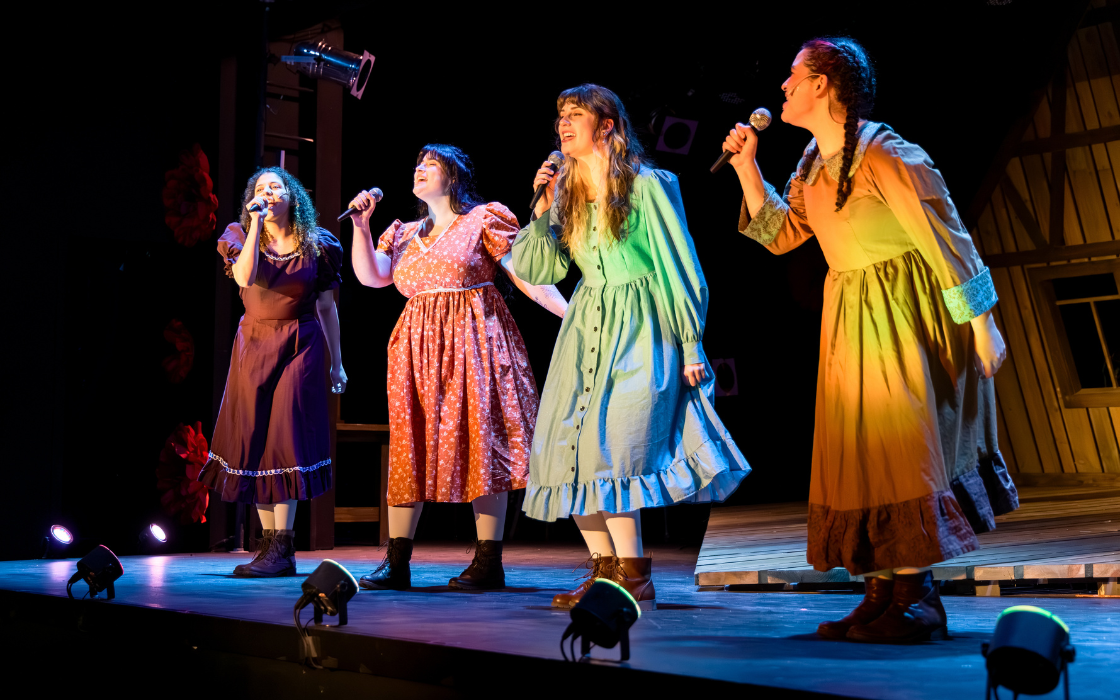
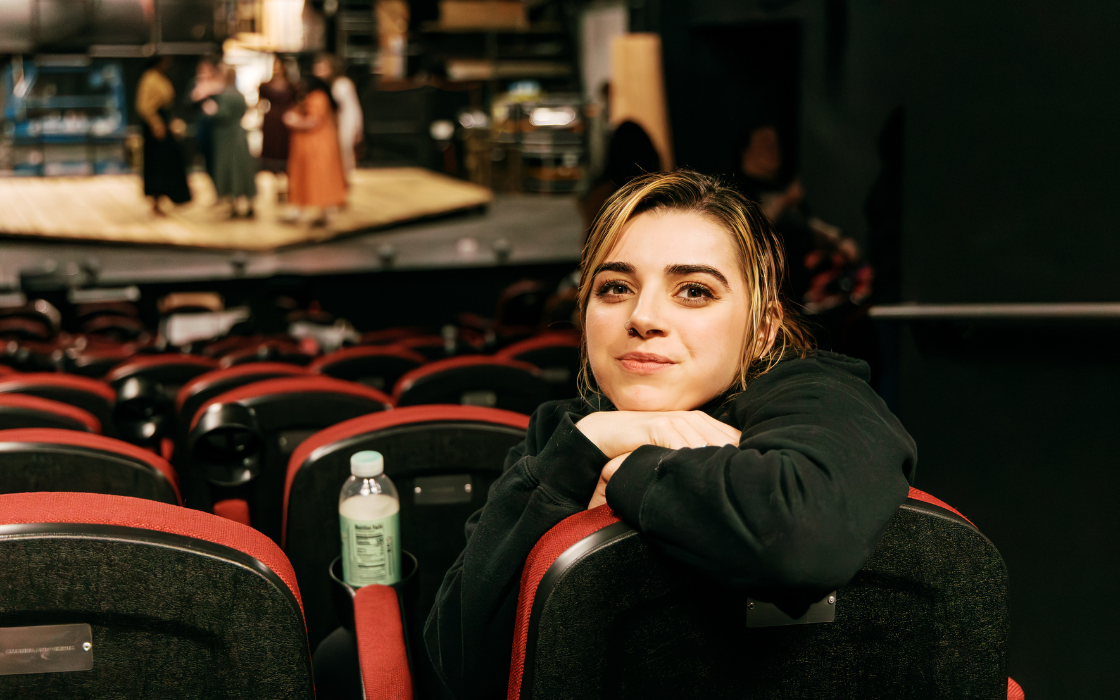
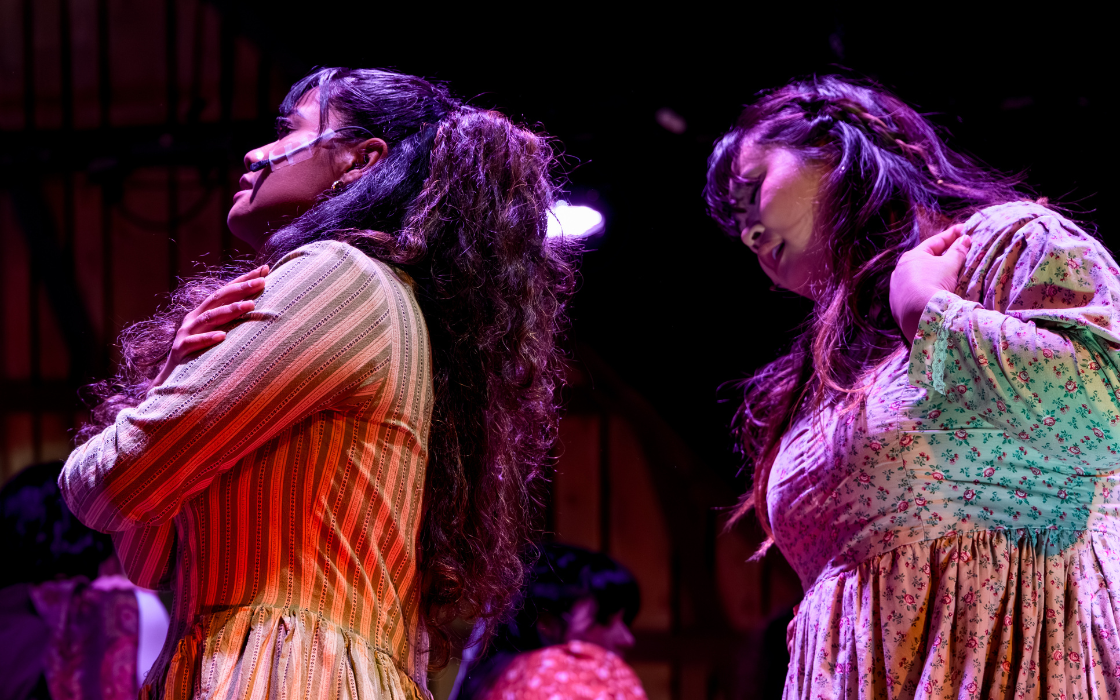
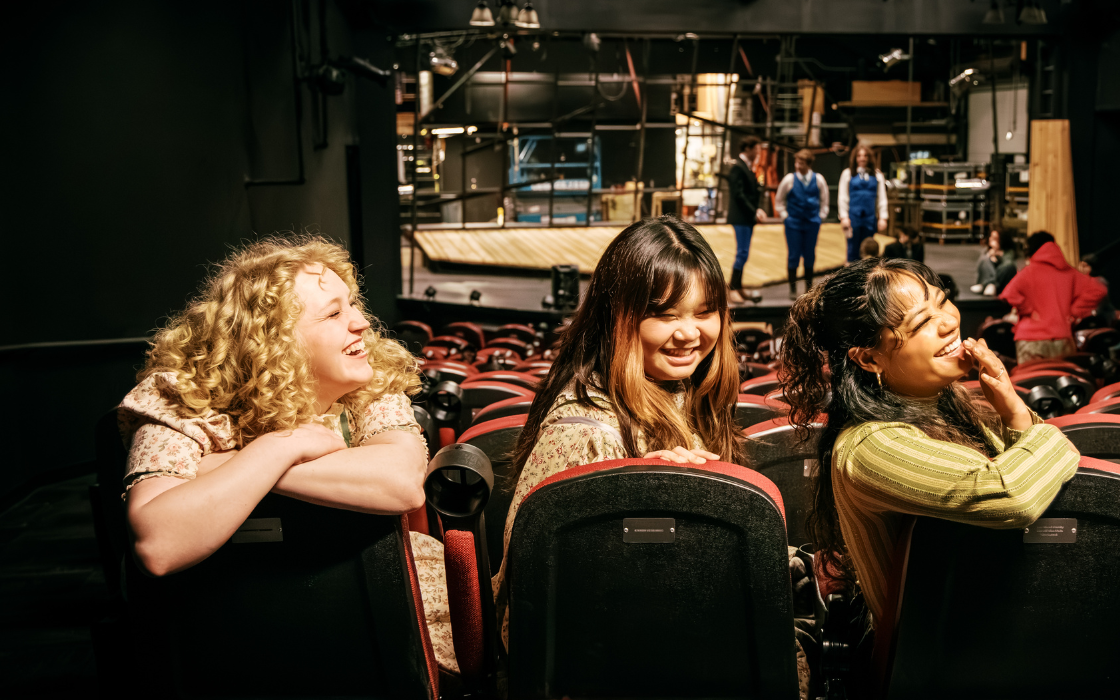
This month, in partnership with Tacoma Little Theatre, students from the University of Washington Tacoma are bringing Spring Awakening to life for its 20th anniversary onstage under the direction of UW Tacoma Associate Teaching Professor Maria-Tania Bandes Becerra Weingarden (lovingly referred to as “Dr. B” by the cast and crew).
Together, they tell a universal story: young people, making sense of their desires, their fears and the silence enforced by adults bound to an oppressive system.
Which is to say, Spring Awakening is about growing up.
Whether it’s 1890s Germany, a 2006 Broadway house or a fictional high school choir room in Ohio, being a teenager feels seismic no matter the century.
Prior to the Tony Awards sweep of 2007, Spring Awakening was a controversial production penned by German playwright Frank Wedekind at the turn of the 20th century. At the time, it was so unflinching in its depiction of adolescent sexuality, abuse and repression that it was banned in multiple countries across Europe.
More than a century later, Wedekind’s play was adapted into a rock musical where electric guitars replaced parlor pianos, school kids broke the fourth wall and forbidden thoughts became heartfelt, aching anthems with heads back and mics in hand.
"This production is about the dangers of silence," Dr. B reflects. “...Ultimately, we have a story written in 1891 that wasn't even allowed to be produced at the time. Most of the tragic things that happen to our characters could’ve been avoided by an honest conversation."
The weight of the material — and why it doesn't crush them
For all its rockability, Spring Awakening is no easy feat to stage; It tackles substantial themes — sexual assault, suicide, abortion, parental abuse — themes that require care, conversation and trust among cast and crew.
The production brought in an intimacy coordinator to ensure vulnerable moments onstage were carefully choreographed and consensually held. “Anything can count as intimacy if it makes you feel like it's an intimate moment," noted Finn Henwood of the ensemble, a senior at UW Tacoma studying psychology. Having someone dedicated to holding that space, students say, made the difference between enduring the material and being safe enough to explore it in a meaningful way.
It's probably not a coincidence that several of the Tacoma Huskies in this production are psychology majors (four of them, to be exact). Spring Awakening has a way of pulling academic knowledge into sharp relief — the connection between silence and harm, education and safety, what adults say and what children carry. For students already trained to think about human behavior, the show is a study in what happens when systems fail the people they're supposed to protect.
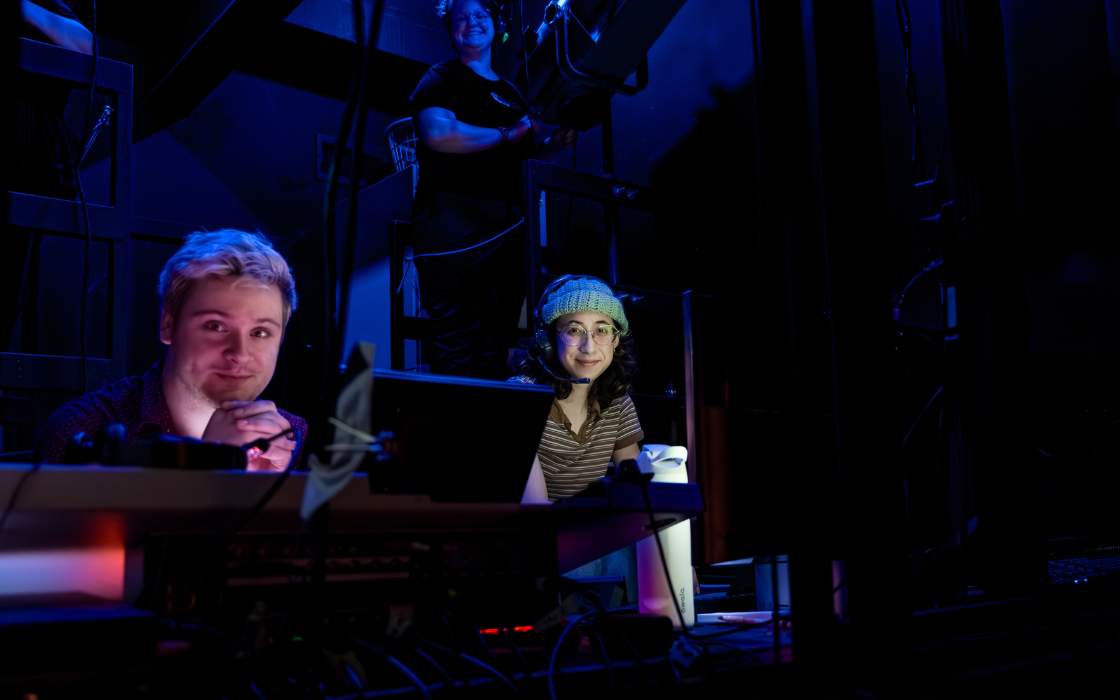
For Assistant Stage Manager Myki Berkebile, a third-year psychology major, that's not a metaphor — it's Monday morning. She works as a behavior technician for children with disabilities, and Spring Awakening has reinforced the “why” behind her work.
"Being an educator is really important to me," Berkebile says. “These are children we’re dealing with… I can’t teach my students everything, but I can teach them to advocate for themselves."
For fellow psychology major Russell Dunmire, who plays Otto Lämmermeier in the principal cast, the show raises a question that feels bigger than any single production:
“The adults in this work — the parents — they’re trying to protect their kids the only way they know how… Harm persists as long as stigma does,” Dunmire reflects. “We get to choose what we pass on to the next generation. Do we pass on the trauma we’ve got? Or do we resolve to do better, even if we do so imperfectly?”
The arts credit that changed everything
Beyond psychology, the Tacoma Huskies behind Spring Awakening are students of health sciences, social welfare, marketing and more. When it comes to matters of the stage, many of them share a similar origin story: They needed an arts credit, they happened upon Dr. B’s “Fundamentals of Acting,” and somewhere between the first scene and the final monologue, something shifted in their spirit.
“The other options to earn credits in the arts weren’t resonating with me,” says Loryestine Buentipo-Perez, a social welfare major, army veteran and member of the ensemble. Stationed in Okinawa before moving back to Tacoma, Buentipo-Perez took Fundamentals of Acting with Dr. B last quarter. "I thought — why not?”
Naitiyah Prum, a biomedical sciences major also cast in the ensemble, was in the same class with her. “This is my first show ever,” she says.
Beyond the credits she needed to graduate, Buentipo-Perez presumed she’d walk away from the acting class with more refined social graces, at the very least. “At the grown age of 24, I’ve got to be able to talk to people,” Buentipo-Perez laughs. At the end of last year, she auditioned for Spring Awakening. She got in, and she's still a little surprised about it. But that’s just Dr. B’s way. “She urged me to audition, and it felt like being invited to join her stage family,” Buentipo-Perez says. “Dr. B saw something in me, and that’s really rare.”
Banned play, borrowed stage
When you’re building something in Tacoma, you start with what Tacoma already built; For over a century, Tacoma Little Theatre has been where Grit City comes to tell its stories, and it was only a matter of time before UW Tacoma pulled up a chair.
Spring Awakening marks the fifth co-production between the two. Over time, the collaboration has found its rhythm, alternating between musicals and plays each year at a steady, intentional cadence.
“Before the pandemic, Dr. B. and I met to talk about theatre in Tacoma and what she wanted to create at UW Tacoma,” reflects Chris Serface, managing artistic director of Tacoma Little Theatre. “We realized that for students to have the best experience available, they needed to be in a working theatre to gain some hands-on practical experience.”
“Tacoma Little Theatre is a generous partner,” says Dr. B, and that spirit of abundance is felt at every turn. Developing this production saw UW Tacoma students engage with performing arts in a new way, thanks to the 100-year legacy of the Little Theatre and its iconic Stadium District digs.
In Spring Awakening, students coordinate the lighting, manage the stage and perform in a full theatrical house — a step up from the Cherry Parkes black box theater, an intimate studio on campus where UW Tacoma performing arts programs usually reside.
“Six years later, we’re ready to open our fifth collaboration that has brought students into the community and exposed ours to the great talent coming out of UW Tacoma,” Serface says. “I've always lived under the motto that theatre begets theatre, and I love that our two groups have this opportunity to make each other stronger.”
_____
Spring Awakening runs March 6-29, 2026 at Tacoma Little Theatre, 762 Broadway, Tacoma. Performances are Thursdays through Saturdays at 7:30 p.m. and Sundays at 2 p.m.
Tickets are $32 for adults, $30 for students, seniors and military. Use the code “UWT2026” at checkout for a 25 percent discount. A “Pay What You Can” performance is available Thursday, March 19 at 7:30 p.m. An ASL interpreted performance will be held on closing day, Sunday, March 29 at 2 p.m. Tickets and information at TacomaLittleTheatre.com.
This production contains strong language, themes of child abuse, simulated sexual activity, simulated self-harm, suicide, a prop gun, strobing light effects and a hypoallergenic fog effect.
Spring Awakening asks us to believe that an honest conversation can change everything. If you need one, UW Tacoma's Psychological & Wellness Services (PAWS) provides free, confidential counseling for currently enrolled students, including individual sessions, crisis support and group counseling. SafeCampus is available to anyone in the UW community who wants to anonymously discuss concerns about safety or well-being, for themselves or someone they care about.