NSF-funded network backs UW Tacoma in expanding undergraduate engineering mentorship and research
When Rebekah Cureg first started her journey as a mechanical engineering student at UW Tacoma, she hadn't given much thought to getting involved in research.
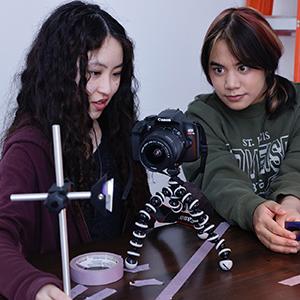
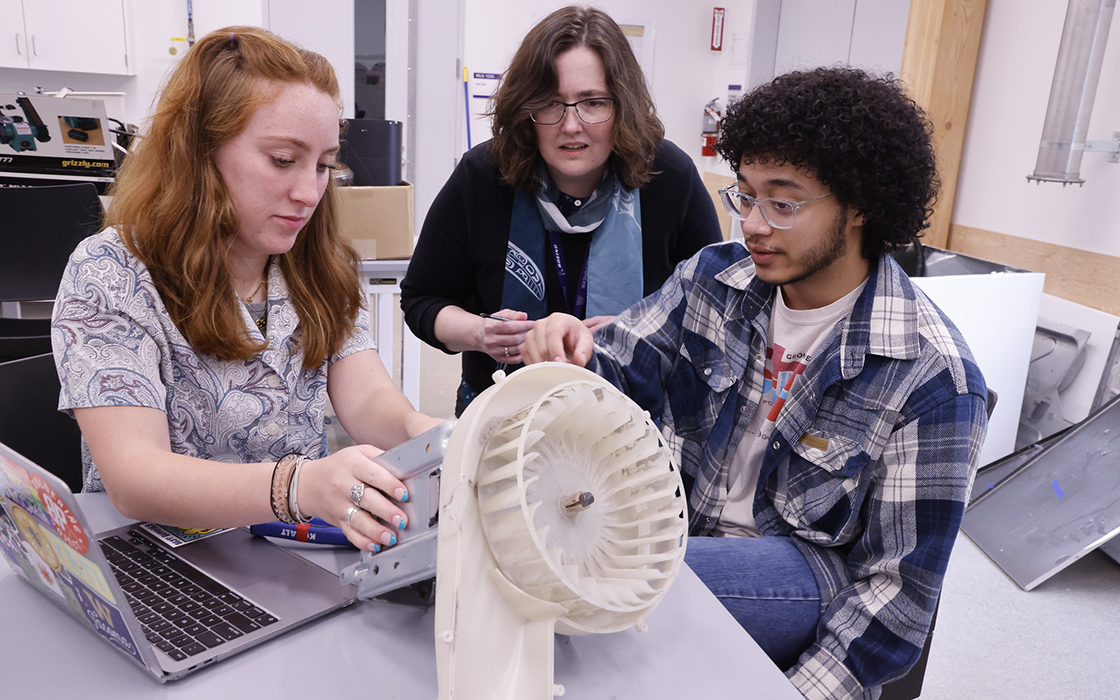
That changed during her sophomore year, when a friend who was already part of a research team suggested she try it. To get started, Cureg met with Heather Dillon, a professor of mechanical engineering in the School of Engineering & Technology, who asked about her interests and invited her to get involved in one of her projects.
At first, Cureg said she felt intimidated because she had no practical research experience and didn’t know what to expect.
“But once you're in the lab, once you're working with people and you have help from people like Dr. Dillon, who understand the scope better than you, you kind of learn along the way," she said. "You grow your skills, and you find yourself wanting to learn more.”
Today, Cureg is a senior and undergraduate research assistant working with Dr. Zhiquan (Andy) Shu's cryobiomedical engineering research. She sees having these experiences as the backbone to strengthening her critical thinking skills and a defining part of her education.
She’s not alone — and UW Tacoma faculty members want these experiences to be far more common.
Dillon and Jeff Walters, an assistant professor of civil engineering at UW Tacoma, are working to make these opportunities available to more undergraduates on campus. With support from a National Science Foundation (NSF) grant, they’ve helped create a network of researchers from several other universities who are committed to doing the same.
Known as the Undergraduate Research Excellence Network, it includes researchers from the Georgia Institute of Technology, Lawrence Technological University, Baylor University, and Rose-Hulman Institute of Technology, the lead institution for the project. The collaboration aims to expand research opportunities for undergraduate engineering students and strengthen the mentorship skills of their faculty members, ultimately increasing student retention and success in these rewarding experiences.
Breaking Barriers to Undergraduate Research
Undergraduate engineering programs can be intense and tightly scheduled, leaving little room for students to find time to engage in research activities.
At UW Tacoma, that challenge is paired with real-world pressures, Dillon says, noting that many undergraduates work part-time jobs while balancing other life responsibilities — but they’re eager to gain hands-on experience with the concepts they’re learning in the classroom.
Dillon and Walters believe there is a solution that can make this high-impact practice more accessible: embedding research directly into the curriculum, an approach that allows students to pursue these opportunities in a structured, worthwhile format.
“Whenever we can connect undergraduate research to an existing course, that really solves a lot of the external problems,” Dillon said.
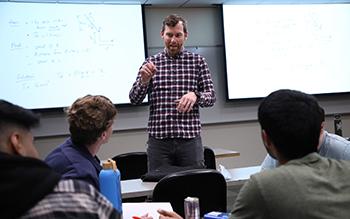
Through coaching, workshops and the development of new training materials, the Undergraduate Research Excellence Network will help engineering faculty adopt more effective mentoring practices that Walters says will encourage students to take ownership of their work, strengthen their identities as engineers and approach challenges with a curious, creative and entrepreneurial mindset.
"Most research is directly focusing on a problem and how to fix it," Walters said. "Showing (students) that process and the impact you can have allows them to be more resilient and persist (through setbacks)."
Using Undergraduate Research to Transform Student Learning
Walters says that although many researchers in STEM fields have made progress in encouraging undergraduates to get involved in their work, participation in these opportunities remains somewhat limited in engineering.
"Undergraduate researchers are not a well-tapped resource for faculty research, even though there are many studies showing the great impacts undergraduate research experiences have on retention, engagement, learning and professional development," he said.
In advocating for more course-based research experiences, Walters reflects on his years as a civil engineering student at the UW and how early projects with groups like Engineering Without Borders helped him understand the positive impact the profession can have on people's lives — and kept him motivated to persist in his studies.
"I've been so fulfilled and gratified through my own research, and I know a lot of other folks have the same experience,” he said. “Why wouldn't you want more students to have that opportunity?"
For Cureg, getting involved in research early on has given her a competitive edge as she gets ready to graduate and begin her career.
She's gained hands-on experience with industry software, and developed skills in team collaboration, building connections with faculty mentors, like Dillon and Shu, and presenting complex topics to her peers. Her efforts even led to co-authoring a journal article that emerged from Shu’s research — a rare accomplishment for students at this stage of their academic journey.
As someone who chose UW Tacoma for its close-knit classes and opportunities to connect with faculty, Cureg said having these experiences will be a big boost for her resume and future career.
Working toward the future, Dillon hopes more students will discover the same confidence — and sense of possibility — that Cureg found in the lab. Becoming a part of this research network is another step toward that goal.
"Hopefully, with all of us doing this across the nation, we're starting to normalize the fact that students want these experiences,” Dillon said. "The research experiences are real-world. They're authentic."
The NSF IUSE Program supports research and development projects to improve the effectiveness of STEM education for all students.