UW Tacoma researcher earns NSF CAREER Award for developing innovative cryopreservation technologies
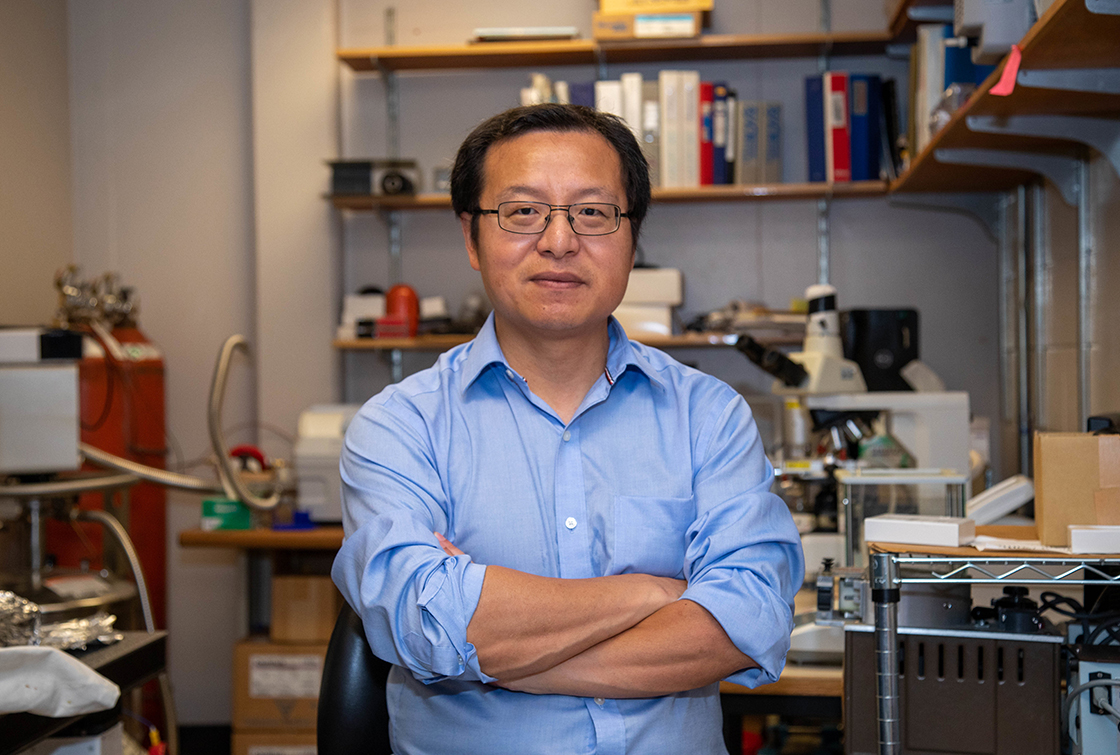
Dr. Zhiquan “Andy” Shu, associate professor of mechanical engineering at UW Tacoma, has received a prestigious CAREER award from the National Science Foundation (NSF) to develop advanced technologies for long-term organ preservation.
Over the next five years, Shu’s project will explore how electromagnetic waves can make organ cryopreservation safer and more reliable, opening new possibilities for patients waiting for life-saving transplants.
The NSF CAREER award recognizes early-career faculty who are shaping the future of research and education. Shu’s project takes on a critical challenge: finding new ways to preserve large organs for longer periods without damaging delicate tissues.
Organ failure remains a leading cause of death in the United States, and many transplantable organs are lost because they cannot currently be safely stored beyond a few hours. Shu’s research aims to change that by developing new methods to protect organs from damage and to allow them to be stored for longer periods, so more patients can receive the transplants they need.
“Our goal is to extend the preservation time (of organs) from hours to months to years through low-temperature preservation,” Shu said, noting that the long-term vision for this work is to create a cryobank to store donated organs for extended periods, increasing the availability and diversity of organs and the likelihood that patients receive the best-matching transplants.
In addition to supporting Shu’s research, the award will also fund activities that empower local K-12 and college students to explore careers in biomedical engineering. These educational and outreach efforts will give more students opportunities to learn about organ preservation and participate in hands-on activities related to this work. It will also create new STEM education opportunities through partnerships with local community organizations, including the Point Defiance Zoo & Aquarium.
The project begins this summer and is expected to continue through May 2031.