


Main Content
Congratulations to UW Tacoma faculty members who were awarded Founders Endowment funds to support a planned need project between 1 June 2026 – 31 May 2027.
Each research project was awarded $10,000 to further proposed scholarly pursuits. Funding is provided through the Executive Vice Chancellor for Academic Affairs and the Founders Endowment. The application and review process was conducted by the Research Advisory Committee (RAC). Founders Endowment award applications are open to all faculty, based on each year's criteria. Our selection process follows the University of Washington nondiscrimination policy: The University of Washington prohibits discrimination, harassment and sexual misconduct in any education program or activity that it operates. Individuals may report concerns, make complaints, or direct inquiries to the Civil Rights Compliance Office. The statement of nondiscrimination is located at: uw.edu/civilrights/policies-and-guidance/statement-of-nondiscrimination/. A special thank you to EVCAA Andy Harris for making $70,000 available for distribution this year, which allowed for the distribution of seven awards.

STEM Theme:
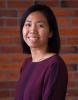
Dr. Wei Cai, SET
CivicTrust: AI-Driven Civic Information Credibility Analysis for Equitable Civic Participation in Tacoma's Multilingual Communities
Dr. Cai’s project focuses on analyzing the credibility of Tacoma’s community social media networks, using an AI-powered system. Tacoma is one of the most culturally and linguistically diverse cities in Washington State. For many of these communities—particularly those with limited English proficiency—social media platforms serve as the primary channels for accessing local civic information, including city council decisions, public health announcements, housing policy updates, and community services. Yet these platforms have no effective mechanisms for filtering misinformation, detecting coordinated manipulation, or distinguishing authoritative information from unreliable sources. The result is a civic information environment in which Tacoma's most vulnerable residents are simultaneously the most dependent on informal social media channels and the least equipped to navigate their unreliability. This project will advance the field of social computing by rigorously testing whether AI methods for trust and manipulation analysis—previously developed and validated in high-stakes financial platform contexts—generalize to civic information environments. It will also produce the first empirical characterization of civic misinformation dynamics specifically within Tacoma's multilingual community platform ecosystem—a dataset with both scholarly value and direct policy relevance for the City of Tacoma and Pierce County.
STEM Theme:
Dr. Duong (Rita) Than, SIAS
Scaling Targeted Mastery: An AI-Driven Bridge System with Integrated TA Support for TMATH 109
Dr. Than’s project is focused on developing three specific AI tools that will formalize a statistically-validated pedagogical intervention into a scalable software architecture. TMATH 109 (Financial and Mathematical Foundations) functions as an essential alternative pathway, bridging the gap to college-level Statistics and Pre-Calculus by contextualizing algebraic skills within personal finance. A “Targeted Mastery” retake policy, which allows students to "unlock" retake opportunities by completing targeted remediation and attending instructor office hours was piloted in Fall 2025. The project develops three specific AI tools hosted on Google Colab: The Scenario Generator: Automatically creates adaptive, context-aware practice problems based on individual student quiz performance to facilitate the "unlock" mechanism. The Trajectory Tracker: An automated intervention system triggered by the "False Confidence" phenomenon identified in the pilot study. Data showed that the first test (T1) has a significant negative predictive relationship with the final exam (\beta = -0.303) when controlling for the average, suggesting that early success can lead to "coasting." This tool monitors the "Delta" between assessments to trigger personalized nudge emails and maintenance quizzes. The Socratic Tutor: A chatbot engineered to assist at-risk students by identifying logic errors without providing direct answers. Unlike standard generative AI "homework solvers," these tools utilize strict system prompts to uphold the Socratic method, acting as a tutoring scaffold that withholds solutions to guide students through the reasoning process. This project is designed to improve the students’ mastery of material by developing the scalable software that will adjust to a student’s individual learning path.

Social Justice Theme:
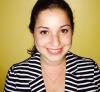
Dr. Chris Demaske, SIAS
LGBTQ Rights: The Escalating Battle Over Freedom of Speech and Expression
Dr. Demaske’s project investigates the specific ways in which the First Amendment is supporting or failing members of the LGBTQ community. Members of the LGBTQ community have historically experienced intense discrimination and difficult struggles in the attempt to garner social and legal acceptance and equality. While some headway has been made on LGBTQ equality in the past 50 years, many discriminatory practices continue and even those that seemed to have been resolved are once again coming under legal scrutiny. Since January 2005, the situation has worsened exponentially. This is exemplified though executive orders, court rulings, and legislation at the local, state, and federal levels covering the gambit from denial of services for same sex weddings to “don’t say gay” policies in schools to bans on drag performances. By considering these disparate laws and cases simultaneously, this project seeks to problematize First Amendment application, which Dr. Demaske contends is currently allowing for erosion of established free expression and association rights for members of the LGBTQ community. The centerpiece to this project is a book-length scholarly manuscript.
Social Justice Theme:
Dr. Rachel Hershberg, SIAS
Completing and Disseminating "Youth Agents of Change": A Youth Participatory and Action Research Project aimed at Addressing Racism in Police-Community Relations in Kent, Washington
Dr. Hershberg’s project is the culmination of a three-year project aimed at addressing racism in police-community relations in Kent, Washington through youth contributions to a Race & Equity Plan (REP). The project involved a partnership with RAP (Restore Assemble Produce), a youth-serving organization with a mission to support BIPOC youth in Kent. Throughout the project the PI taught RAP youth YPAR (Youth Participatory Action Research) tenets, including its emphasis on youth-led research as a tool for change; provided trainings in research methods; helped youth develop and implement research to inform their contributions to the REP; and helped youth share their work with KPD. The project culminated in the REP that centered youth scholars’ ideas and the Chief of Police signed it in June 2025. The goal with this award is to finish the writing on this research project and disseminate scholarship in peer-reviewed journals.
Social Science Theme:
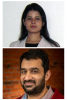
Dr. Sana Khalil, SIAS and Dr. Zaher Kmail, SIAS
Who bears the cost? Investigating AI-Driven Workplace Displacement in Washington State
Washington State ranks among the six U.S. regions most vulnerable to AI. Research consistently indicates that displaced workers face substantial and lasting economic difficulties, including lower wages long after losing their jobs, occupational downgrading to lower-skilled roles, and extended periods of unemployment and instability. In Washington, these risks are especially severe for administrative and routine cognitive workers, who are more susceptible to automation and often lack transferable skills to adapt to changing job requirements. However, current AI risk indices—such as those developed by Tufts, Goldman Sachs, and the Yale Budget Lab—along with much existing research on AI-driven workforce displacement, mainly assess vulnerability at the levels of occupations, industries, and regions. They do not clarify which specific workers within these categories face the greatest burden. This study directly addresses that gap by examining how AI-driven workforce displacement in Washington State unevenly impacts workers in different demographic groups: women, workers of color, low-wage workers, and other marginalized groups. It also explores whether protections related to occupational requirements for human oversight are equitably distributed and whether AI automation is lowering entry-level hiring opportunities—pathways that traditionally support upward mobility among disadvantaged workers.
Social Science Theme:
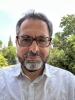
Dr. Etga Ugur, SIAS
Sufi Politics in the Middle East
Dr. Ugur’s research project addresses a critical gap in Middle East studies and comparative politics by illuminating how less explicitly political yet immensely influential Islamic forces shape the public sphere. When we hear about religion and politics in the Middle East, the storyline is usually about secular governments clashing with Islamist movements or extreme Salafi groups. But this misses a crucial piece: Sufi orders—Islamic mystical brotherhoods that have quietly influenced Middle Eastern politics for centuries and actually have more followers than either Islamists or Salafis. This blind spot matters because incomplete understanding leads to flawed policies. Policymakers, journalists, and even scholars have largely ignored Sufis, treating them as irrelevant mystics or merely as victims of extremist violence and preventing us from fully grasping how religion shapes politics in one of the world's most strategically important regions. Dr. Ugur’s research reveals that Sufis are far from passive bystanders.
Humanities Theme:
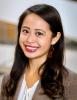
Dr. Tabitha Espina, SIAS
Setting the Course toward Self-Determination: Rhetoric, Resistance, and Recitation in Guåhan's Decolonization Movement Archive
Dr. Espina’s research examines how the Indigenous CHamoru people of Guåhan (Guam) have constructed counter-archives across four decades to challenge U.S. colonial narratives and assert their right to self-determination. Through rhetorical analysis of UN testimonies (1982-2022), grassroots organizing materials, and the "For Guåhan, By Guåhan" museum exhibit that Dr. Espina helped develop through contracted research consultation, she investigates how colonized communities create, maintain, and mobilize archives as tools of political resistance.