Shared Futures Explores Wellness and Civic Engagement
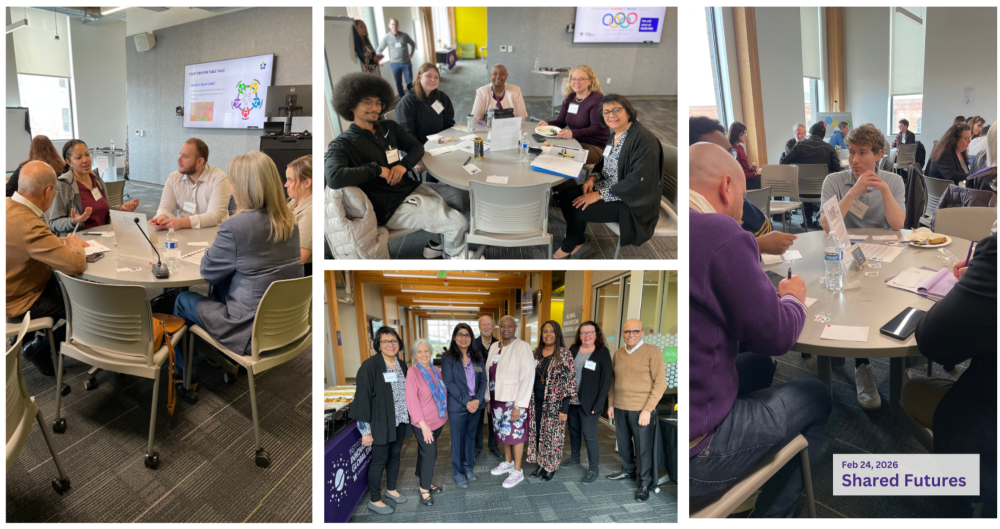
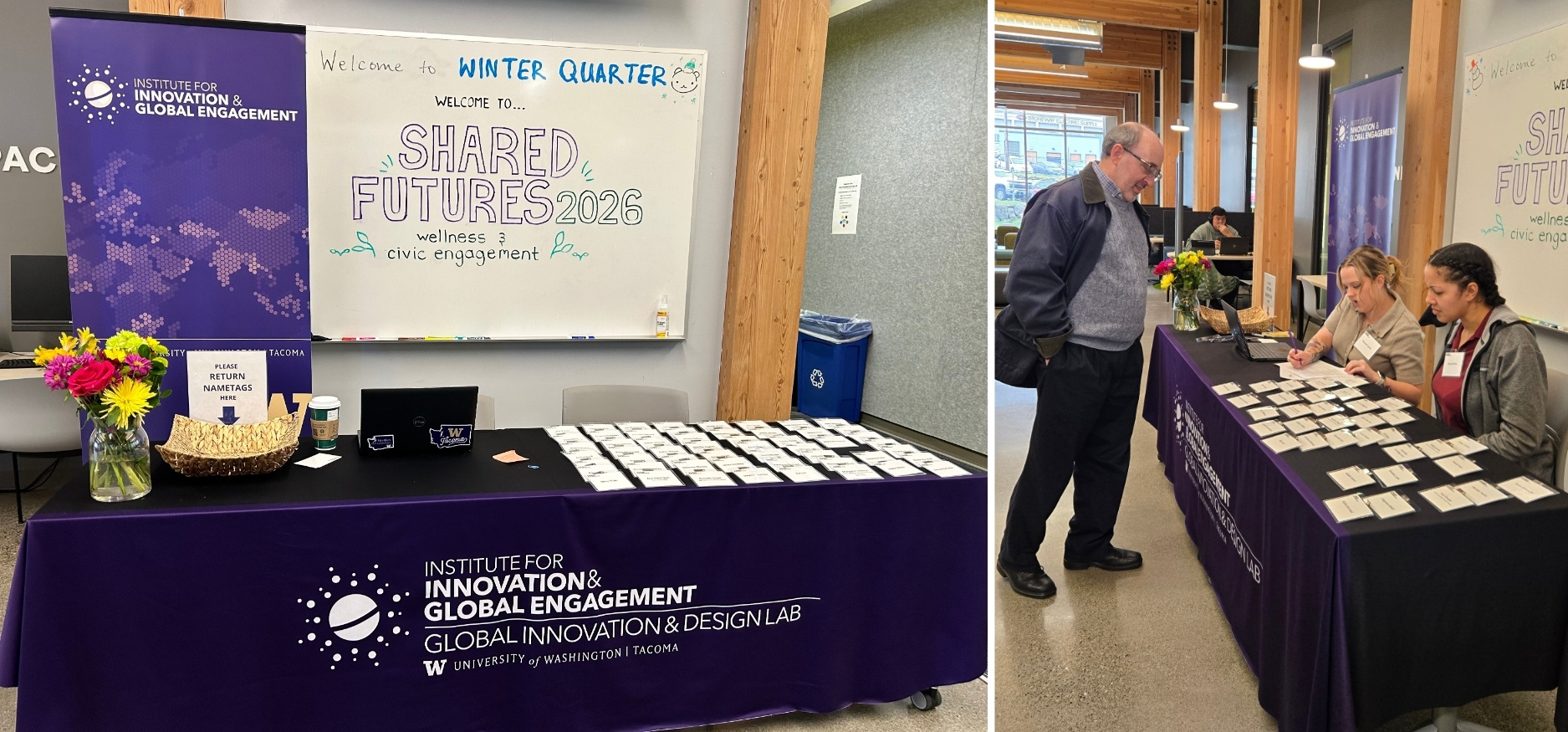
Shared Futures 2026 on February 24, helped students explore the intersection between civic engagement and wellness. This year’s Shared Futures was also its 10th anniversary, with the topic of Wellness and Civic Engagement. The event served as a pilot collaboration with Class XI Fellows of the American Leadership Forum Tacoma-Pierce County.
The event welcomed nearly 60 UWT students, faculty and community leaders. They engaged in two rapid rounds of "Table Talk" to brainstorm ideas under the theme, “Your Voice. Your Wellness. Our Shared Future.”
UW President Robert Jones has urged all UW campuses to help students increase their civic engagement. The IIGE's annual Shared Futures meets the charge and "is a 'big tent' of creativity, where students and community members co-design solutions to issues common to all," said Associate Vice Chancellor Divya McMillin. Chancellor Sheila Edwards Lange's words "We rise with our community" drew applause as she spotlighted the work of the Global Innovation and Design Lab in connecting students to civic opportunities. American Leadership Forum (ALF) Class XI Fellow Dr. Jayasri Ghosh announced Flannigan’s Forum to extend such conversations where “everyone should have a voice.” ALF co-Fellow Ann Brown shared the ALF goal to support students in civic engagement and build relationships of trust.
“We do Shared Futures because we are not alone in this world…We share a campus, a community, and a planet," said Alyce McNeil, IIGE Managing Director and event facilitator. "This room is full of folks to connect with if you need assistance or opportunity.”
Participation at the event centered on interactive table discussions featuring a “Red Dot, Blue Dot” activity which revealed common stressors affecting attendees, including immigration challenges, job-search anxiety, homelessness, environmental instability, ethical concerns surrounding artificial intelligence (AI), and academic pressures. As participants listened, it became clear that many were carrying similar burdens. This underscored the theme that our personal wellness is shared, so it becomes an opportunity for collaborative intervention and civic response.
After naming common barriers, the conversation turned towards solutions and actions, including working in community centers, building relationships with community members, engaging with legislation and public policy, and advocating for issues they care about. Participants recognized that strengthening civic engagement promotes personal wellness, and that individual wellness and community engagement work together in moving towards collective change.
Student Affairs Associate Director and Administrator Sean Schmidt served as a table leader and described this year's experience as "fantastic." "One of the most powerful aspects was watching students connect with professionals they would not normally meet," he said. "The networking felt natural, especially as conversations moved from structured exercises into open dialogue." Schmidt also emphasized that the size and format of the event contributed to its success. "Small table discussions allowed for deeper engagement," said Schmidt, "while the larger group share-out created a sense of unity."
As for the impact of the event on students, feedback was equally favorable. Simrat Chhokar, a junior IT major and Global Innovation and Design Lab intern was dialed in. "I experienced Shared Futures not just as an event, but as a space for honest reflection," she said. Chhokar shared her "aha" moment: "When the larger group shared out, what stood out most was how similar our concerns were. That realization was powerful and reminded us that we are not alone in carrying these anxieties. Despite our differences, we found common ground in our desire for stability, fairness, and opportunity."
The discussion shifted the focus from stress to action and participants shared ways to engage in civic life by connecting with campus and community resources and fostering solidarity. Shared Futures created a meaningful environment where vulnerability was welcomed, and students felt heard, connected, and supported. By creating space for shared voices, the Institute for Innovation and Global Engagement continues its mission of fostering ethical, inclusive, and creative problem-solving locally and globally.