NSF Funds Student Research on Electoral Districts and Gerrymandering
Undergraduates will apply cutting-edge data analytics to state redistricting, supported by a $340,000 NSF grant.
A National Science Foundation grant will support undergraduate student research on electoral redistricting.
The grant, $343,000 over three years from the National Science Foundation, funds a collaborative project between UW Tacoma and the University of Puget Sound.
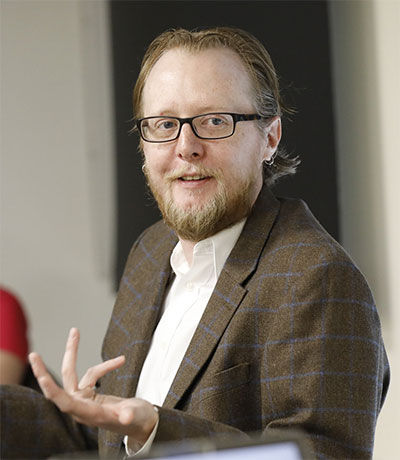
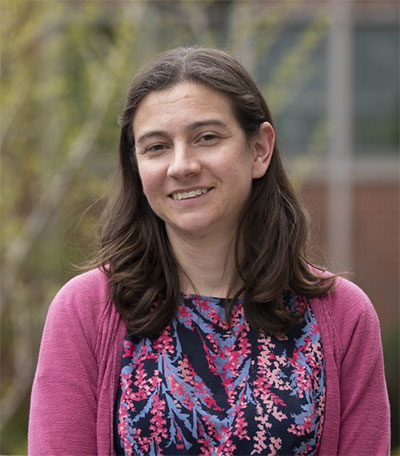
Jim Thatcher, assistant professor of urban studies at UW Tacoma, is the principal investigator on “Spatial Models and Electoral Districting,” funded through NSF’s Research Experience for Undergraduates (REU) program. Courtney Thatcher, an assistant professor in math and computer science at Puget Sound (they are married), is co-investigator.
“We’ll be focusing on the social impacts of algorithmic redistricting methods — especially related to the impact of individual experience and movement through space — on perceptions of gerrymandering,” said Jim Thatcher.
Gerrymandering is the intentional manipulation of electoral district boundaries meant to create an advantage for one political party over another. The word refers to Elbridge Gerry, governor of Massachusetts, who authorized the remapping of a district outside Boston, Mass., in 1812, meant to favor his reelection.
Redistricting and gerrymandering have a rich history in the U.S. Although redistricting occurs every 10 years, on the heels of the U.S. population census, controversies flare up continually. Most recently, courts ordered Michigan and Pennsylvania to revisit their 2010 redistricting; and courts are in the process of deciding about Ohio, North Carolina, Virginia and Wisconsin, among others.
The three-year UW Tacoma/UPS project will fund 12 students each summer from those two institutions and others around the country. They will blend cutting-edge computational and mathematical research analysis with social theoretical knowledge from geography and other social sciences.
“The pace of technological change these days is fast.” said Jim Thatcher, “Since redistricting only happens once every 10 years, there are many advances in geographic information science and data analytics that simply didn’t exist during the last cycle.”
This summer, students will take a critical look at traditional methods of evaluating redistricting proposals, with the goal of providing a new framework for that evaluation. “With modern analytical tools and computational approaches, both intentional and unintentional issues around disenfranchisement are more easily brought to light,” said Thatcher.
Ultimately the project will produce a generation of students who can get involved in upcoming redistricting at a fundamental level. “Dreaming big,” said Thatcher, “the work of the students will have a direct impact on state redistricting plans.”
Recent news
Main Content
From campus to capitol
Main Content
Accelerating healthcare breakthroughs through privacy-preserving AI
Main Content
Two Tacoma Huskies honored for commitment to civic and community service
UW Tacoma in the News
Main Content
Director of UW Tacoma's Husky Post Prison Pathways interviewed alongside 'A Voice 4 the Unheard' founder John Bunn
Main Content
UW Tacoma professor speaks on viral dance culture in The New York Times
Main Content
For death row inmates with severe mental illness, UW Tacoma psychologist contributes to conversation on competency for execution
Contact Information
- Phone: 253-692-5880
- Email: uwturban@uw.edu
- Urban Studies, School of (directory)