Where curiosity meets community
When you imagine scientific research, what do you see?
Chances are, you’re picturing sprawling laboratories filled with highly specialized equipment and researchers working late into the night.
Depending on the project, you’re not too far off.
At the University of Washington Tacoma, however, research takes many forms and often starts somewhere more familiar: a lingering curiosity that won't go away.
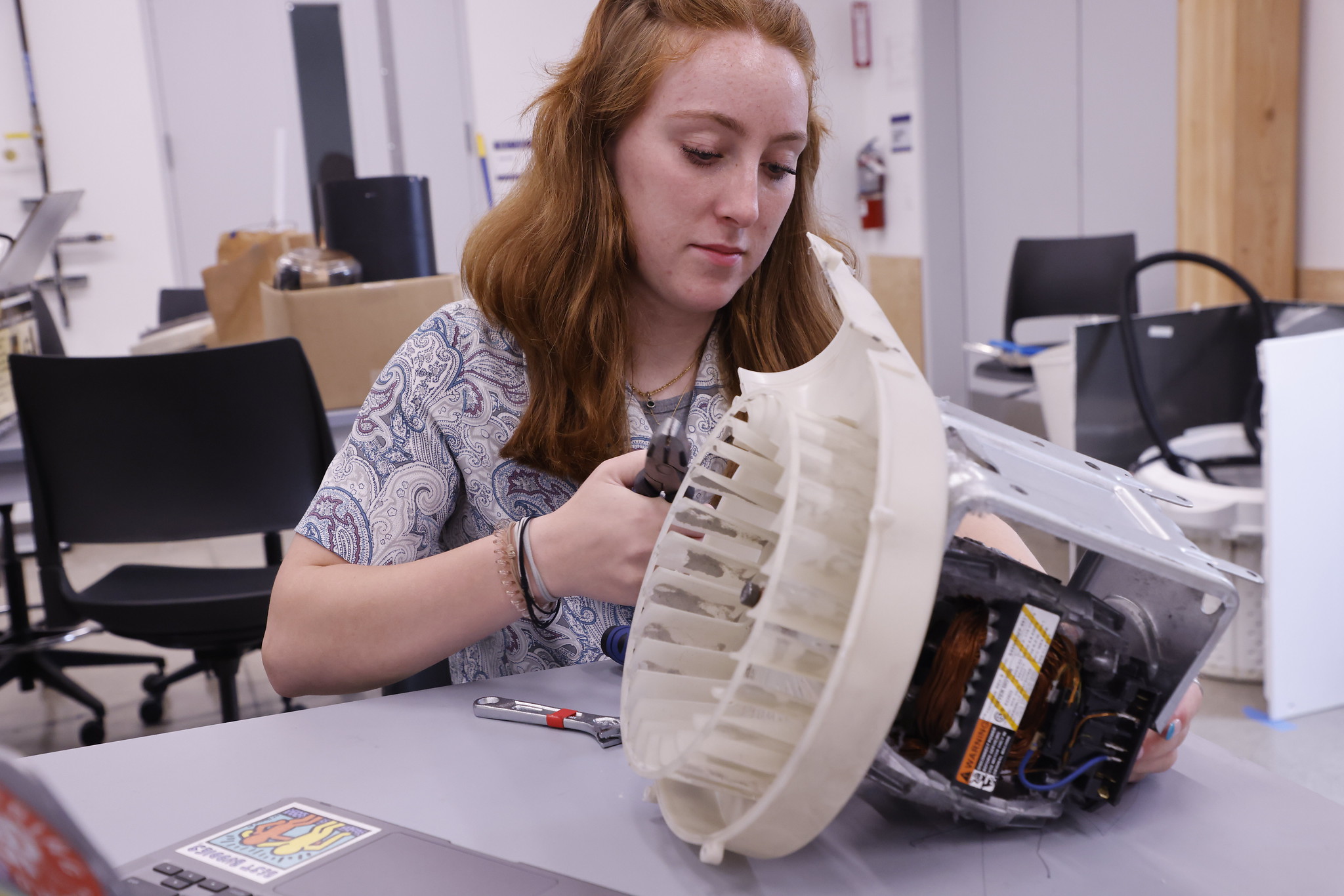
A student wonders why some of their peers struggle to find community on campus. Another wants to understand how harmful chemicals flow through Puget Sound. Someone else becomes fascinated by the microscopic behavior of bacteria. An aspiring mechanical engineer starts asking what happens to discarded household appliances after they're hauled away from the curb.
The questions are different, but the impulse is the same:
Tacoma Huskies want to know more, and they want their work to make an impact in their communities.
It’s why research and scholarship have emerged as quintessential elements of the Tacoma Huskies experience, and as part of the UW research ecosystem, UW Tacoma brings its own distinct flavor to innovation.
Grit City research: Discovery meets impact
The campus has developed a reputation for conducting research that’s deeply connected to the communities it serves, giving students the opportunity to work alongside faculty on projects that address local issues, expand opportunity and improve lives across the region.
The result is a learning environment where discovery and public impact go hand in hand. And within the broader UW system, UW Tacoma’s community-focused approach complements the expansive global research enterprise evident across all three UW campuses.
Across disciplines, Tacoma Huskies work alongside faculty mentors, tackling questions that connect directly to the South Sound, the Pacific Northwest and the world beyond it. The work strengthens classroom learning, builds confidence and changes the way students see themselves.
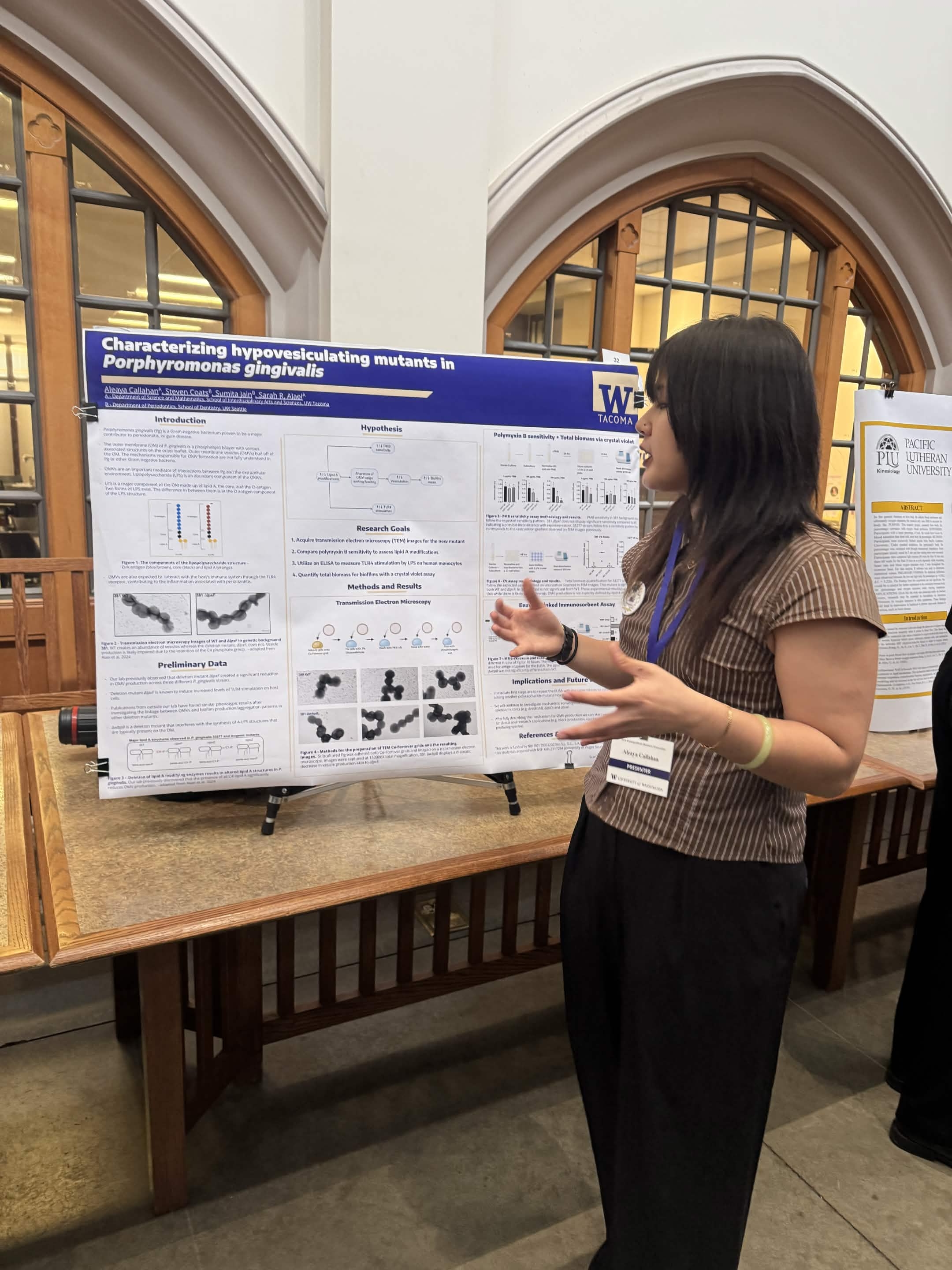
Just ask biomedical sciences student Aleaya Callahan (‘26), a new grad who crossed the commencement stage earlier this spring.
For years, Callahan imagined her future as a physician, but that changed after arriving at UW Tacoma, where she realized through her chemistry coursework that she didn’t need to be a medical doctor to serve her community.
Today, she is part of two research teams with entirely different focuses: One investigates the behavior of Porphyromonas gingivalis, a bacterium associated with gum disease. The other explores how mentoring programs can better support adoptees by identifying what adult adoptees need from those relationships.
Somewhere between running experiments and community-focused research, Callahan paused to reflect not on the complexity of the work but on the trust granted to her so early in her college journey.
She found herself conducting bench work, developing independence and working closely with faculty who treated her as a collaborator, not just a pupil. Over time, the experience built something even more valuable than technical skills. It helped Callahan build conviction in the lab.
"The things I have accomplished in my research career have given me the confidence boost I really needed," she reflected. "My confidence, paired with my skill set, will take me anywhere I want to go."
That sense of growth shows up again and again in the stories of undergrads who participated in research projects across campus.
Sometimes, the research itself becomes a mirror.
Psychology student Ty Rodrigues experienced that firsthand while studying how student involvement shapes a sense of belonging at an urban-serving university like UW Tacoma. Through interviews with students, staff and campus leaders, Rodrigues and fellow researcher Giselle Llamas explored the challenges and opportunities students encounter as they build community.
The project started from a personal place: Both researchers understood what it felt like to search for belonging on campus.
But as the interviews unfolded, Rodrigues began to notice something else:
The research shed light on the experiences of other students, but it was also helping him understand his own journey.
"I went from being a freshman looking for community to becoming a senior looking at how we can better support incoming students," Rodrigues said.
That perspective captures something powerful about undergraduate research. Students don't have to wait until graduate school to investigate meaningful questions with academic inquiry. They can examine issues that affect their own lives, their communities and their futures right now.
And many do.
For Tacoma, for the world
This year alone, UW Tacoma students investigated a remarkable range of research topics.
Environmental Science student Nghi Phan analyzed toxic algal cysts in Bellingham Bay, research that can help identify areas at risk for harmful blooms and potential public health concerns.
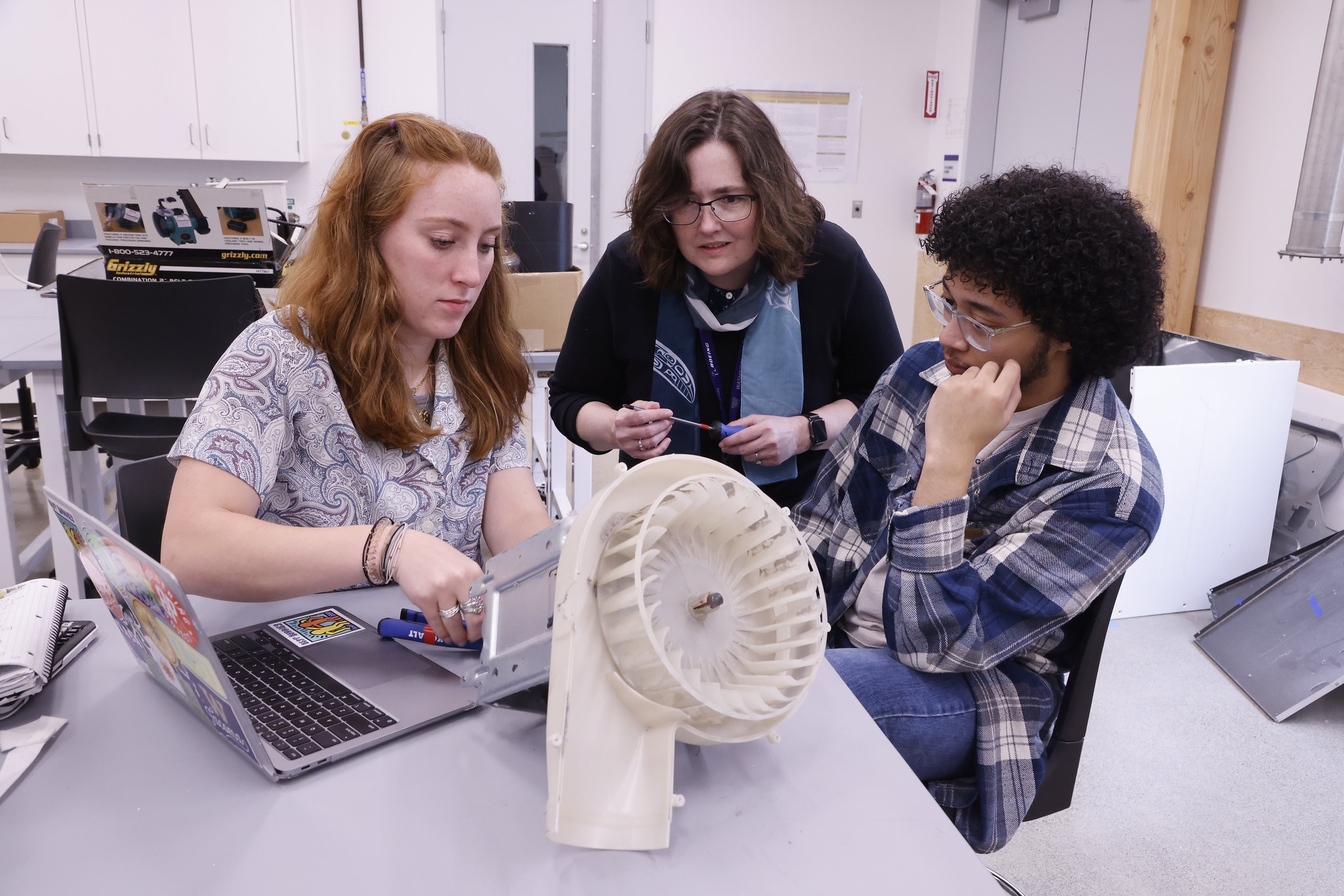
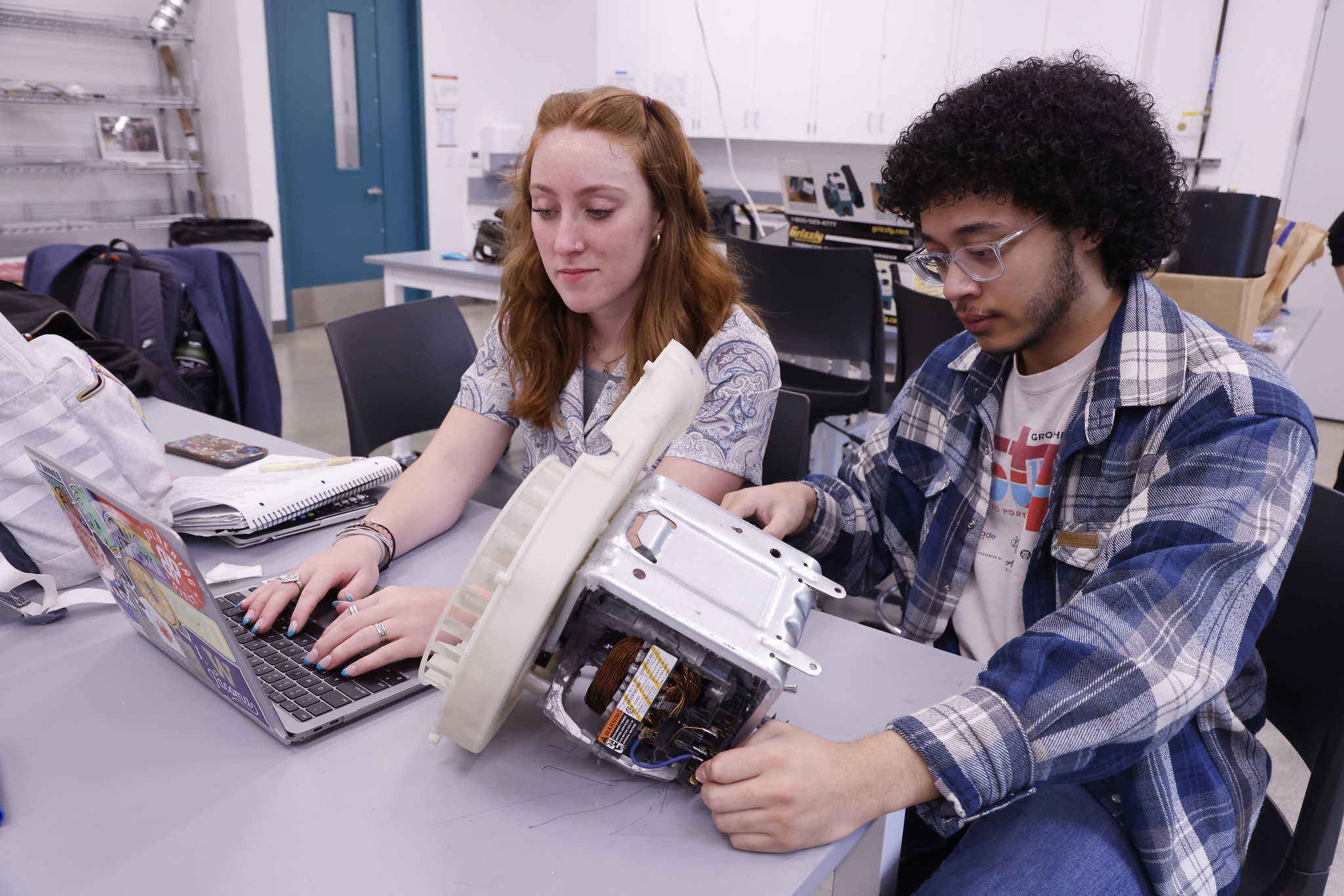
Mechanical Engineering student Angelina James examined the sustainability of household appliances and identified design barriers that make repair and recycling more difficult.
Biomedical Science student Alex Saltos studied per- and polyfluoroalkyl substances (PFAS) contamination in Puget Sound waterways, contributing to growing efforts to understand the environmental impact of so-called "forever chemicals."
Mechanical Engineering student Andrew Kim explored dielectric heating and cryopreservation technologies that may help improve the preservation of biological materials.
Their areas of study vary greatly, but their experiences are bound by a common thread:
Students are applying what they learn in class to questions that affect ecosystems, industries, health outcomes and communities.
Faculty mentorship makes that possible. With support from the Clare Booth Luce Foundation and other benefactors, teams at UW Tacoma are leading the way in training faculty to be transformational mentors to students.
Research universities are often measured by publications, discoveries and funding — and those metrics matter. Still, the human side of conducting research deserves attention, too.
For many UW Tacoma students, this work begins with a faculty member who sees their potential.
Sometimes that means helping a student refine a research question. Other times, it means opening the door to a lab, introducing a new methodology or offering encouragement during a difficult stretch of a project.
Regardless of what that mentorship looks like, the impact can be lasting.
One student — Kevin Michalson, a Computer Science and Systems major — described spending months pitching a research idea before finding a faculty advisor who embraced the project. In his case, it was Teaching Professor Joanne Clarke Dillman, Ph.D., who helped shape Michalson's curiosity into a successful thesis. He spoke about how working closely with professors helped transform feelings of imposter syndrome into a sense of belonging and accomplishment: “I know students who believe they don’t belong, or think they’re wasting their time. Unless they have a tangible achievement to prove themselves, it can be hard to convince them otherwise,” Michalson reflected. “That’s what this research project represents for me.”
Dr. Heather Dillon, Associate Vice Chancellor for Faculty Success in the School of Engineering and Technology, confirmed the lasting impact of these experiences: “Our unique programming at UW Tacoma has demonstrated a range of positive outcomes for students, including identity formation and sense of community. These amazing students often need just a small nudge to go on to publish and consider graduate programs.”
These stories reflect a distinctive strength of UW Tacoma's research environment. Students gain access to faculty mentors who know their names, understand their goals and invest in their growth. The result is research that feels deeply personal, but not at the cost of academic rigor.
Entirely unique, altogether original
What students discover will undoubtedly change the world, but, more importantly, engaging in research early in their academic careers changes how they see themselves and the world.
Students learn how to evaluate evidence and ask better questions. They learn persistence when answers don't come easily. They discover that uncertainty isn't a roadblock, but a starting point every researcher knows.
Callahan discovered a career path she hadn't considered. Rodrigues found himself investigating the same questions of community and belonging that shaped his own college experience. Michalson found evidence that he belonged in academic spaces that once felt intimidating.
At UW Tacoma, undergraduate research serves as a bridge between learning and doing.
Sometimes the result is a new discovery.
Sometimes it's a new understanding of a social system, scientific process or technology.
And sometimes, it's more personal: the realization that you are capable of contributing something entirely unique and altogether original.
For many Tacoma Huskies, that's where the journey truly begins.
________
Looking to get involved in undergraduate research at UW Tacoma?
The Office of Undergraduate Research advocates for inclusive and meaningful research experiences, promotes student engagement in research and provides centralized support for undergraduate research across the University of Washington tri-campus community.
Learn more about pathways to research projects, build your skills and explore the opportunity database online at the Undergraduate Research website.
Questions, or looking to connect with someone who can answer them? Send an email with your research inquiry to undergraduateresearch@uw.edu.