


Main Content
Welcome to the Master's in Community Planning Program at UW Tacoma!
UWT Master's in Community Planning Program prepares students to become leaders in shaping urban communities, emphasizing collective, just, and sustainable planning processes.
Now accepting applications for Autumn 2027!
Want more information? Click here to book an appointment with the Academic Advisor.

MACP Student Nwagu Aneke Performance at 2026 MLK Jr. Unity Breakfast



Community planning is, fundamentally, about imagining the kinds of futures we collectively want for our neighborhoods, cities, and communities—and then developing pathways to work toward those futures.
The MA in Community Planning program prepares students to become leaders working to shape urban communities. Students learn to analyze the city from multiple vantage points and to use that understanding to work effectively with grassroots organizations, non-profits, community members, and government agencies.
Guiding Principles
| Co-creating Just Urban Futures with Community We co-create knowledge, practices, and urban solutions alongside communities, organizations, and public partners. Our work starts with lived experience and grows through shared inquiry, collective imagining, and place-based collaboration. |
Practicing Critical Inquiry for Creative Urban Problem-Solving We practice creative, reflective, and critical thinking as tools for understanding and transforming cities. By examining systems, questioning assumptions, and designing actionable responses, we equip students and partners to navigate, analyze, and collectively shape urban complexity. |
| Cultivating Possibility in Urban Life We cultivate a belief that better urban worlds are within reach. Through imagination, agency, and experimentation, we open space for alternatives in classrooms, in neighborhoods, and in the systems that shape everyday life. |
Advancing Social & Environmental Justice in Cities and Regions We advance social and environmental justice by exploring how race, gender, class, indigeneity, ability, and geography intersect in Tacoma and beyond. We work to illuminate power, expand belonging, and design urban environments where all people can thrive. |

How is the Master of Arts in Community Planning different from an Urban Planning program?
In the MACP, you will develop tools to do effective community planning work, grounded in:
- A sense of history. To be an effective community planner you need to understand what has come before, and the processes and practices that have generated the cities that we now live in. This includes understanding the histories of places, the history of planning, and the history of cities. It also includes exploring past efforts to create more just and sustainable communities, to learn from and to inspire your own planning practices.
- An understanding of social structures and institutions. Faculty in the MACP come from a variety of disciplinary backgrounds, which grounds students' understanding of urban issues. Students explore such issues including, but not limited to race and access, urban social movements, gender and urbanization, spatial justice, and urban narratives and counter-narratives.
- Community engagement skills. Working with people to plan toward collective futures is a skill. The MACP prepares students for this kind of work with training in facilitation and engagement methods to gather community input.
- Imagination and a sense of possibility. Community planning is fundamentally about envisioning urban futures. MACP students are encouraged to think beyond conventional solutions, drawing inspiration from history, from the experiences of community groups, and from listening to the perspectives of community members.
Why Choose the MACP?
Small Classes
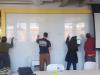
MACP classes are capped at 20 students and are often smaller than that. This means that you get to know your classmates and faculty and they get to know you.
Discussion and practice-based curriculum
Because cohorts are small, our classes tend not to be lecture or exam-based. Rather, courses ask students to think through analytical questions, to practice skills, and to engage in projects.


The Cohort Model
The MACP operates on a cohort model. This means that every admitted class of students takes the same classes, working through the program together. By the end of the program, students in each cohort know each other very well! This is especially useful for a program like ours, where many of our graduates go on to do work in the Puget Sound region. When you graduate, you will have close connections and shared understanding with a group of local community planning professionals.
Final Applied Studio
The MACP Program culminates in a studio project that applies the skills and analysis from your classes to a real-world project. The studio project is different every year, but usually done in collaboration with a community organization or city entity. Past projects have proposed long-term planning priorities for the City of Tacoma, developed community engagement plans, garnered community input through focus groups, and researched projects in other cities to examine their feasibility in Tacoma.
The studio project offers opportunities to network with working community planning professionals and gain experience working on real projects that will have real impact. Students complete this studio project instead of the thesis or comprehensive exam that is required in some master's programs.

Course meeting times meant for working professionals
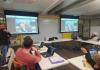
MACP classes all meet on Tuesdays or Thursdays, 3:40pm-7:40pm. This schedule offers predictability, and leaves most of your days available.
Community connections in Tacoma
Our program is firmly grounded in Tacoma and the surrounding South Sound region. Our faculty members, staff, and students have strong relationships with local community organizations with city and county governments. The School of Urban Studies has an Advisory Board, composed of regional community leaders, that serves to push the program forward and provide resources and networking opportunities for students.


Tacoma!
Tacoma is a fantastic and fascinating place to study cities! The city is beautiful, built on Commencement Bay and surrounded by the stunning Puget Sound. It has beaches, sandstone cliffs, resident eagles, woodland trails, and spectacular views of Mount Rainier. It is also one of the most diverse cities in the Pacific Northwest, having deep Native, Black, Asian, and Latine roots. The local Puyallup Tribe of Indians has a strong history and present of resisting colonization, and a vibrant, rooted presence in the city. It has strong roots in organized labor, innovative community programs, and loads of ways for community planning students to plug in.
Where our students go on to work

Recent alumni have entered PhD programs around the country, and found employment as:
Regional and Field Support Section Chief at Federal Emergency Management Agency
Community Relations Specialist at Gesa Credit Union
Sr. Program Manager at King County Housing Authority
Community Planner at City of Seattle
Housing Policy Strategic Advisor at the Washington State Department
Community Advocate at Tacoma Housing Authority
Project Manager at Washington State Department of Health and Social Services
Marketing Manager at Windemere Professional Partners
Water Infrastructure and Engagement Specialist at New York State Water Resources Initiative
Environmental Health Policy Coordinator
Tacoma-Pierce County Health Department
Frequently Asked Questions
Program Content & Structure
Over the course of the program each of these topical areas are addressed in some fashion. For instance, through case studies, course readings, short- and longer-term class assignments, and community engagement partnerships.
However, the distribution of this emphasis can change from year to year, and in general we tend to focus on local and regional issues more than international topics.
Courses in the MACP program are organized by themes and skills (for instance, communication; social movements; equity; power; spatial design; etc., that cut across multiple issues. In any given course students are exposed to different areas of traditional spatial planning and development policy. No MACP courses are designed to focus exclusively on a single area of planning.
Possibly. It depends on the faculty teaching a particular course, and whether their emphasis and syllabus aligns with your topic of interest. However, it is important for prospective students to know that the MACP is not a "choose your own adventure" degree. Our pedagogy is founded upon community engagement and social learning, which means that 1) we work together on particular project commitments, sharing the process and delivery of scoping, defining, and producing work products that emphasize collaborative leadership and inclusive management skills; and 2) our collaborative projects are defined by the expressed needs and existing histories of our community partners, which may or may not align directly with your own topical area of interest.
Our commitment is to building effective community engagement and integrative skills among our students, which we believe are transferable and applicable to a wide range of issues and topics -- including your passion project.
We do not give credit for work and service that you are already involved in, outside MACP coursework. These commitments are important - we look for evidence of community engagement in our applicants, and encourage it in our students - but academic credit involves significant additional reading, writing, and reflection. In rare cases a student can arrange an independent study or research project with faculty sponsorship, but this cannot replace required MACP coursework, and requires negotiation between all parties (student, faculty, and outside group) to establish academic expectations and work products.
No. You are welcome to explore classes in other areas, and this can be an enriching addition to your training in community planning. Students sometimes enroll in additional UW classes over the summer, or find that they can add another, complementary class during a regular term, particularly if they are a full-time student, and do not have other work commitments. However, such classes do not apply to the MACP degree, may require additional tuition or fees, and cannot be substituted for MACP courses. The graduate advisor can tell you more.
MUP/MURP: The MA in Community Planning is most commonly compared to a master's in Urban Planning or Urban & Regional Planning (MUP/MURP). While there are similarities, the main difference lies in our broad-based commitment to social justice and equitable development, which requires a shift from the traditional design or public policy orientation of most planning programs. Design and policy traditions are present in our curriculum, however, the MACP draws on a wider array of professional practices and academic concepts, to train community planners in strategic, inclusive, and analytic skills of collaborative leadership for socio-spatial change.
For example, in a MUP/MURP degree you would take a Land Use Law course (Traces development control historically and analyzes contemporary approaches to land-use control which reflect environmental and economic development concerns), in the MACP program, you take a course on Legal Urbanism (Examines the statutory and administrative bases of decision-making authority across subfields [e.g., historical preservation, transportation, environmental]).
Our aim is to prepare students to become leaders working for positive change in urban communities–by analyzing issues of social justice and equity and using that understanding to work effectively with grassroots organizations, non-profits, community members, and government agencies. Our alumni work in careers in community development, urban planning, community engagement and outreach, economic development. Our graduates have found jobs at organizations such as the Tacoma Housing Authority, Forterra Community Land Trust, Tacoma City Planning Department, and Des Moines City Planning.
MPA: There are also important similarities between the MACP and a Master's of Public Administration (MPA): namely the focus on a variety of professional roles, both public and private, beyond planning; the embracing of public affairs and collaborative governance as an important aspect of graduate training in community planning; and the use of the case-study method and practice-oriented deliverables and work products, in many MACP courses. However, the MPA emerges from a more narrow training in public sector management and administration, and has typically been more focused on professionalization of civil service, as opposed to a stated, normative commitment to justice and social change. The MACP is more interdisciplinary and equity-oriented than most MPAs.
MSGT: The Master's of Science in Geospatial Technologies (MSGT) is also focused on training professionals to bring about greater equity, justice, and social change in urban development, in this case through technical skills related to mapping, geospatial data, spatial representation, coding, and mobile app development. The MSGT grounds students in critical thinking and social equity concerns not always at the forefront of the rapidly expanding geotechnical profession; it is a one-year, four-quarter, 40-credit program for students with existing GIS experience, capacity for programming and application development, and a commitment to geospatial technology as a career field.
Careers & Program Outcomes
Community Planners:
- Act as important liaisons between policy development, planning, and community thinking;
- Work across sectors and organizational scales, and build physical, financial, and operational capacity; and
- Enable communities to engage the democratic process and create sustainable places and programs
Given this skillset, here are some examples of positions community planners are poised to fill: Outreach Coordinator, Community Liaison, Project and Program Manager, Planner, Marketing and Government Relations Manager, Community Organizer, and Field Organization Manager.
Yes. Graduates with this degree can become planners. If you are interested in becoming an AICP (American Institute for Certified Planners) planner, you need to get certified through the American Planning Association (APA). For more details on this, visit the APA website.
Our alumni work in a range of fields, both public and private.
They hold job titles including:
- Community Advocate
- Community Capacity Specialist
- Community Environmental Management Specialist
- Consultant & Business Owner
- Director of Project & Construction Management
- Environmental Health Policy & Legislative Liaison
- Intergovernmental Affairs Manager
- Landscape Architect
- Management & Program Analyst
- Marketing Manager
- Philanthropy Manager
- Project Manager
- Senior Administrative Program Manager
- Senior Planner
They work for organizations and in fields including:
- BECU
- City of Tacoma
- FEMA (Federal Emergency Managment Agency)
- King County Housing Authority
- King County Regional Homelessness Authority
- Non-profit sector
- OAC Project & Construction Management
- Tacoma Housing Authority
- Tacoma-Pierce County Health Department
- Washington State Department of Social & Health Services
- Windermere professional partners
Yes. University of Washington Tacoma has many great resources available to graduate students. The best resource is the dedicated staff from the Career Development and Education Center. They are a free resource for students, and we encourage our students to start working with them early in the program.
Once students have an updated resume and an idea of the types of opportunities that interest them, they are invited to make appointments with MACP faculty to discuss their specific search. Urban Studies faculty are well-connected to organizations (government, for profit, and non-profit) in the region, and are frequently approached with internship and full- and part-time job opportunities. If faculty know what you are looking for, they are likely to recommend or connect you to these opportunities as appropriate.
Finally, the Urban Studies staff updates the Career & Resources page weekly which provides employment opportunities, internship opportunities, and other career resources through Tacoma, the state of Washington and beyond.
The Basics
There are twelve (12) required courses, requiring two years of full-time study, with summers off. Each course is five credits, for a program total of 60 credits (UW operates on a quarter system). Students take two courses per quarter (autumn-winter-spring) for two years, and move through the program curriculum as a cohort.
Yes. Some of our students opt to pursue part-time status. Typically these students enroll in one course per quarter, rather than two, and take twice as long to complete the degree (i.e. 4 years instead of 2). This can be a good option for students who expect that jobs and other obligations will make it difficult to sustain the work required in graduate school. The downside for part-time students is that it may be more difficult to build and enjoy the cohort-based trust and familiarity with other students that is an important benefit of the MACP program.
It depends. Are you someone who thrives on having a "full plate"? How demanding is your job, and are you engaged in other commitments that require your time and attention? How flexible is your employer?
Some people can work full-time and go to school full-time, especially if they know that other interests may need to take a back seat for a while, and that it is for a limited period of time. Others recognize that their work, graduate study, and other relationships may suffer somewhat, and decide that these trade-offs are too costly, even for a relatively short period of time.
Additionally, some positions allow students the flexibility to prioritize their studies when necessary. While the majority of our master's classes are offered in the evenings, some classes will require fieldwork that necessitates some degree of availability during the day.
Talk to other graduate students, to the graduate advisor and program coordinator, and to your supervisor, colleagues, and family members to help you decide.
We have chosen to focus on interpretive and practical skills that diverge somewhat from the classic urban design and public policy assumptions of city planning. For this reason, our curriculaum does not currently follow the requirements of the Planning Accreditation Board (PAB), and the MACP, therefore, is not currently accredited by the PAB. However, we are institutional members of the Association of Collegiate Schools of Planning (ACSP); our graduates are able to sit for and earn American Institute of Certified Planners (AICP) certification, should they wish; and our program assessment is being designed with input from PAB experts.
Admissions Criteria
No, the MACP program at UW Tacoma does not require applicants to take the GRE.
The UW Graduate School requires that applicants have a GPA of 3.0 or higher in their most recent two years of academic work. Only in exceptional circumstances may a student be admitted with a GPA marginally below this grade. The Urban Studies MACP program looks carefully at each applicant’s grades in relevant coursework, and also at their statement of purpose and letters of recommendation in making decisions on admission to the program.
For detailed information about the application process and how to submit all documents, see the Graduate School's "Understanding the Application Process" page: grad.uw.edu/admissions/understanding-the-application-process.
All applicants create an online MyGrad account to submit their application, along with requested supporting materials, including unofficial transcripts, a statement of purpose, and letters of recommendation. Your completed application will be reviewed by a graduate faculty committee. Applications received by the priority deadline are guaranteed to be reviewed shortly after that deadline. Applications received after the priority deadline, but before the final deadline will be reviewed on a space-available basis.
We encourage prospective students to visit UW Tacoma, and to meet with faculty and advisors, if possible. If travel to the campus is not feasible, you can also schedule a phone meeting with faculty and/or advisors.
Applications received by our priority deadline are guaranteed to receive consideration. Applications received after the priority deadline, but before the final deadline will be considered on a space-available basis.
We encourage students from a broad range of undergraduate disciplines to apply to the MACP program. Community Planning is a unique program and field which thrives on diverse backgrounds and experiences. The program is more focused on what you want to do in the future than what you have studied in the past. We also respect the experiences students have outside of academia, including travel, volunteer work, community involvement, and other actions and activism that round out a student's resume. Students with backgrounds as diverse as visual art, sociology, filmmaking, history, architecture, social work, and many other fields can bring those disciplines to the program.
While the MACP program is quite young, successful applicants have come from across the nation, from diverse disciplines, and with a variety of life experiences. The successful applicant is one who is articulate in explaining why they are applying to this program, has shown himself/herself to be committed to - and actively pursuing - social justice and equity in communities and at government levels. The successful applicant is passionate about creating social change, and is eager to ensure that communities have a voice in decision-making. Applicants should show evidence of concern about issues that impact communities, especially communities with less access to power.
There is no "typical" Community Planning student. In our short history as a program we have had a host of students who are unique, committed, energized, innovative, and eager to understand and acquire the skills needed to make significant and positive social change - to lead with strategy and understanding, and to follow with strong belief in community knowledge, appropriate data, and a commitment to authenticity. It is a rigorous academic and experiential program that seeks ....
Community Planning Studio Projects

2025: A Post Pandemic City
arrow_drop_down_circle 2025: A Post Pandemic City
An Ongoing Exploration of How to Enhance and Revitalize Downtown Tacoma

2024 Downtown Tacoma's Post-Pandemic Potential
arrow_drop_down_circle
2023 Asberry Community Outreach Playbook
arrow_drop_down_circle 2023 Asberry Community Outreach Playbook
This playbook outlines a community engagement plan that will gather input from community
members to inform the design, development, and implementation of the Asberry Home Site.
This community engagement plan is guided by an overarching ethic to prioritize Black
people, spaces, and culture, particularly in the Hilltop. It is rooted in an approach that values
deep listening, proactive outreach to minoritized groups, cultural preservation, and Black joy.
This plan describes and explains how to execute community engagement methods including
town halls, interviews, online surveys, focus groups, and canvassing at community events. It
also offers guidance on how to collate and analyze data collected from each method. These
methods were selected because of their high potential to generate robust feedback from
community members in a manner that prioritizes equity and authenticity.
Once executed, this community engagement process will raise community awareness about the
Asberry Home Site, gather valuable feedback from target groups, and thoughtfully incorporate
community preferences into the final plan for the site.

2020 Blue Collars in Green Cities: Exploring Transit Oriented Manufacturing
arrow_drop_down_circle 2020 Blue Collars in Green Cities: Exploring Transit Oriented Manufacturing
This report contains work produced by the 2020 MACP cohort for their culminating studio project. The Community Planning program and the School of Urban Studies are committed to the potential of academic research to further community interests. In a process of investigation and co-learning, students, faculty, and local partners work to forge meaningful relationships that can confront emerging problems and provide opportunities for equitable development. The culminating studio is a two-term (20-week) course intended to enable students to apply the lessons from their MACP courses to an important community-based project. For 2020, that project was Blue Collars in Green Cities: Exploring Transit Oriented Manufacturing.
The Community Planning program and the School of Urban Studies are committed to the potential of academic research to further community interests. In a process of investigation and co-learning, students, faculty, and local partners work to foreground issues and connections that provide opportunities for shared growth and equitable development. In a region that is seeing substantial investment and population increase, there are also widening disparities among different demographic groups, stubborn overall poverty rates, and stagnant or deteriorating environmental conditions (PSRC 2017). These realities require deeper, community-oriented research, analysis, and action. A clearer understanding of the complex challenges facing working waterfronts and the communities they serve will enable local leaders to work proactively with stakeholders, to build strong constituencies for investment, innovation, resource protection, and sustainable growth.
Download Individual Report Sections
Introduction
Chapter 1: Profiles in Manufacturing 1
Chapter 2: Profiles in Manufacturing 2
Chapter 3: Profiles in Manufacturing 3
Chapter 4: Profiles in TOD/TOM 1
Chapter 5: Profiles in TOD/TOM 2: Transit Development and Manufacturing Coast to Coast
Chapter 6: Departures from the Norm: Innovative Planning For Creative Manufacturing
Chapter 7: Offsite and Downstream
Chapter 8: Identifying a Constituency
Appendix
2019 Urban Waterfronts and Planning for Industry
arrow_drop_down_circle 2019 Urban Waterfronts and Planning for Industry
This report contains work produced by the 2020 MACP cohort for their culminating studio project. The Community Planning program and the School of Urban Studies are committed to the potential of academic research to further community interests. In a process of investigation and co-learning, students, faculty, and local partners work to forge meaningful relationships that can confront emerging problems and provide opportunities for equitable development. The culminating studio is a two-term (20-week) course intended to enable students to apply the lessons from their MACP courses to an important community-based project. For 2020, that project was Blue Collars in Green Cities: Exploring Transit Oriented Manufacturing.
The Community Planning program and the School of Urban Studies are committed to the potential of academic research to further community interests. In a process of investigation and co-learning, students, faculty, and local partners work to foreground issues and connections that provide opportunities for shared growth and equitable development. In a region that is seeing substantial investment and population increase, there are also widening disparities among different demographic groups, stubborn overall poverty rates, and stagnant or deteriorating environmental conditions (PSRC 2017). These realities require deeper, community-oriented research, analysis, and action. A clearer understanding of the complex challenges facing working waterfronts and the communities they serve will enable local leaders to work proactively with stakeholders, to build strong constituencies for investment, innovation, resource protection, and sustainable growth.
Download Individual Report Sections
Introduction
Chapter 1: Institutional Arrangements
Chapter 2: Land, Water, and Transport Use
Chapter 3: Place Attachment in Relation to Urban Waterfronts and Planning for Industry
Chapter 4: Historical Tensions: Moving Forward With Public Support
Chapter 5: Public Access and Industrial Shorelines
Chapter 6: Economic Development
Chapter 7: Environmental Health
Appendix

2018 Livable City Year: Roadmap to Civic Engagement
arrow_drop_down_circle 2018 Livable City Year: Roadmap to Civic Engagement
The University of Washington’s Livable City Year (LCY) initiative enables local governments to engage UW faculty and students for one academic year to work on city-defined projects that promote local sustainability and livability goals. The program engages hundreds of students each year in high-priority projects, creating momentum on real-world challenges while enabling the students to serve and learn from communities. Partner cities benefit directly from bold and applied ideas that propel fresh thinking, improve livability for residents and invigorate city staff. Focus areas include environmental sustainability; economic viability; population health; and social equity, inclusion, and access. The program’s 2017–2018 partner is the City of Tacoma; this follows a partnership with the City of Auburn in 2016–2017.
The LCY program is led by faculty directors Branden Born (Department of Urban Design and Planning), Jennifer Otten (School of Public Health) and Anne Taufen (Urban Studies Program, UW Tacoma), with support from Program Manager Teri Thomson Randall. The program was launched in 2016 in collaboration with UW Sustainability and Urban@UW, with foundational support from the Association of Washington Cities, the College of Built Environments, the Department of Urban Design and Planning, and Undergraduate Academic Affairs.
LCY is modeled after the University of Oregon’s Sustainable City Year Program, and is a member of the Educational Partnerships for Innovation in Communities Network (EPIC-N), the collection of institutions that have successfully adopted this new model for community innovation and change.
For more information, contact the program at uwlcy@uw.edu.
Download Individual Report Sections
Executive Summary
Introduction
Chapter 1: Methods
Chapter 2: Purposeful Civic Engagement
Chapter 3: Challenges in Practice
Chapter 4: Opportunities
Chapter 5: Recommendations
Chapter 6: Conclusion
Chapter 7: References
Appendices